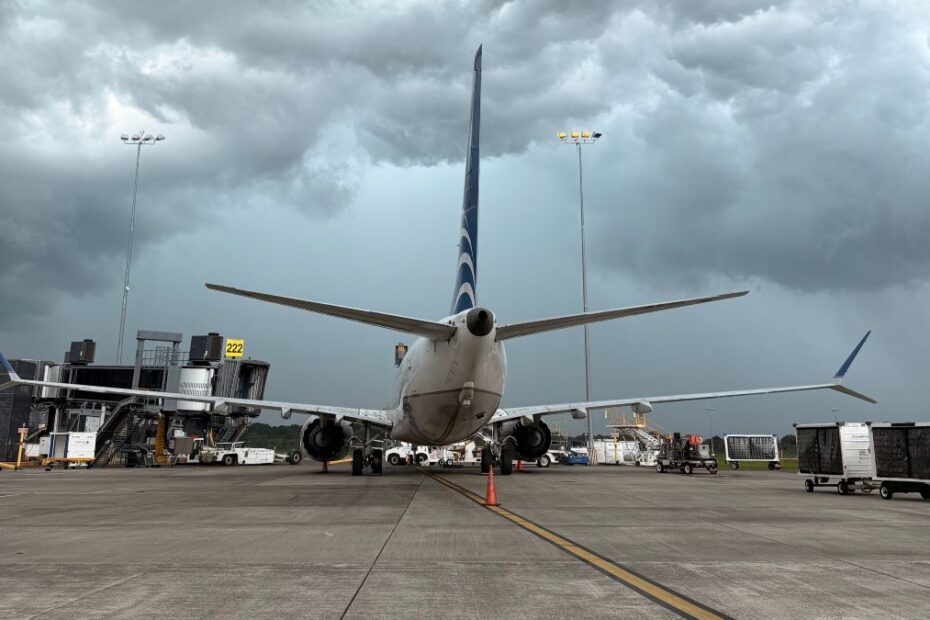
This guide covers how to travel between Central America and Asia, from Pacific routes through the US and Mexico City to connections through Europe.
Getting between Central America and Asia takes some planning. More than getting between Central America and Europe, and obviously much more than getting between here and South America. After all, the opposite side of the world from Central America is in the Indian Ocean, off the coast of Indonesia, so it’s just about the furthest distance you can travel between two different places.
For most destinations, you’re looking at two or three flights, and the route that makes sense for Tokyo might be quite different from the one you’d choose for Bangkok or Delhi. There is one notable exception, though. Turkish Airlines connects Panama City with Istanbul, the only direct link between Central America and an Asian country. Obviously, we know that Istanbul Airport is on the European side of the Bosporus, but it’s something rather than nothing.
Whichever way you travel between Central America and Asia, head west across the Pacific or east across the Atlantic and through Europe, it’s a very long way. This article is about making sense of the routes and figuring out the best way to get halfway around the globe.
One thing to check before you book: some countries, including the United States and Mexico, treat a connecting flight as an entry, so depending on your passport you may need a visa just to change planes. Rules vary by nationality and change often, so check with the embassy of any country you’ll pass through.
View this post on Instagram
Through the United States
For most travelers in Central America, the United States is the obvious place to start looking, as it’s where most flights departing Central American international airports go to. The best connecting airport for your Asia trip depends on your destination, so it’s worth looking beyond whichever U.S. city you normally fly into.
West Coast Connections
The West Coast is a good starting point for East and Southeast Asia. Los Angeles has nonstop flights to Tokyo, Seoul, Taipei, Hong Kong, Shanghai, and Beijing, among other destinations. Those cities also provide onward connections if you’re continuing elsewhere. San Francisco has a similarly extensive network, including nonstop services to Singapore, Manila, and Ho Chi Minh City, plus Delhi in India.
Texas and the South
Texas can work well too, particularly if it saves you an extra flight within the United States. Dallas/Fort Worth has nonstop services to Tokyo, Seoul, Hong Kong, Shanghai, and Taipei. Houston offers Tokyo and Taipei, as well as routes east to Istanbul, Dubai, and Doha. That gives you options for reaching Asia in either direction.
Miami is useful, too. It has no nonstop passenger flights to East Asia, but Turkish Airlines flies to Istanbul, Emirates to Dubai, Qatar Airways to Doha, and EL AL to Tel Aviv. Istanbul, Dubai, and Doha also provide onward connections across Asia, making Miami an option for destinations well beyond the Middle East. Gulf airlines have been running reduced schedules since early 2026 because of the conflict in the region, so check the current situation before relying on Dubai or Doha.
Atlanta is another hub to consider. Delta flies there direct from every Central American country. From Atlanta, there are nonstop flights to Seoul and Tokyo across the Pacific, and east to Istanbul, Doha, and Riyadh. Seoul has several departures a day, which makes it a practical connection point for the rest of Asia.
Midwest and East Coast
New York opens up more possibilities, although you need to distinguish between JFK and Newark when searching. Both have flights to India, while JFK also has a nonstop service to Tashkent with Uzbekistan Airways, an option for reaching Central Asia without connecting through Istanbul. Washington Dulles and Boston also have nonstops to Tokyo and Seoul, plus Taipei from Dulles and Hong Kong from Boston, along with flights to Istanbul and the Gulf, though fewer flights reach either from Central America.
Chicago is another airport to compare. O’Hare has connections across the Pacific as well as nonstop flights to Istanbul, Dubai, and Doha. The point is to compare the complete itinerary: reaching a particular U.S. airport easily is useful only if the onward flight gets you where you want to go without an unnecessarily long wait or another connection.
Through Mexico City
Mexico City offers another way across the Pacific, with flights to Tokyo, Seoul, and Shenzhen. It’s often overlooked, and it’s an alternative if you’d rather not connect through the United States. The choice is smaller than you’ll find in California, but check it if one of those cities is your destination or gives you a convenient onward connection.
Tokyo is the straightforward option, with ANA and Aeroméxico both flying nonstop between Mexico City and Narita. That makes it possible to reach Japan with one change of planes if you have a nonstop flight into Mexico City. Tokyo can also serve as your connection to other destinations in Asia.
The Seoul and Shenzhen services work a little differently. Flying toward Asia, both stop to refuel elsewhere in Mexico, because Mexico City’s altitude means a fully fueled long-haul aircraft can’t take off from there. You stay on the same plane throughout. In the opposite direction, both fly nonstop into Mexico City, so check both directions when comparing total journey time, whether you’re heading to Seoul or staying in Shenzhen, which otherwise has only a weekly flight from Los Angeles.
Mexico City also has flights east to Istanbul, though leaving Mexico City they stop in Cancún first, so Panama City’s nonstop is the more direct option from Central America.
Heading East Through Europe and Istanbul
Flying east across the Atlantic rather than west across the Pacific gives you several options, particularly if you’re departing Costa Rica or Panama. Madrid, Paris, Amsterdam, Frankfurt, and London all offer connections into Asia, while Panama City’s nonstop Istanbul service gives you access to Turkish Airlines’ network without going through another European hub.
Istanbul and Turkish Airlines
Istanbul deserves particular attention because of that Panama connection we mentioned earlier. Turkish Airlines gets you easily from Istanbul to elsewhere in Turkey, Central Asia, and the Middle East. You can also continue from Istanbul to India, Southeast Asia, Tokyo or Seoul, as well as destinations across China and elsewhere. For anyone in Central America, a flight into Panama followed by Istanbul and onward could be a no-brainer. Check the return journey carefully, as some services stop in Bogotá while others operate nonstop back to Panama.
Madrid
Madrid has links with Guatemala City, San Salvador, San José, and Panama City. Its onward destinations include Tokyo, Seoul, Beijing, Shanghai, and Hong Kong, plus a less frequent Bangkok service. It also offers connections through Gulf airports if your destination requires another flight, although you should compare that extra stop with the other ways east.
Other European Connections
Paris and Amsterdam come into play if you’re starting in San José or Panama City. Air France connects both cities with Paris Charles de Gaulle, while KLM serves Amsterdam. Their Asian networks give you options for East, South, and Southeast Asia, including cities such as Tokyo, Delhi, Bangkok, and Singapore. A trip to Thailand, for example, could involve one change in Paris or Amsterdam rather than flying through the United States and connecting again in East Asia.
San José also has a nonstop Frankfurt service, opening up connections through Lufthansa’s hub. London is another option: British Airways moved its Costa Rica flights from Gatwick to Heathrow in October 2026, putting arrivals at the same airport as its services to destinations including Delhi, Tokyo, and Singapore. That makes London more useful for an onward journey than an itinerary requiring a transfer between Heathrow and Gatwick.
What matters is how these flights fit together on your travel dates. One European connection could get you all the way to your destination, but a long wait might make another route more appealing. And if you’d like to spend a few days in Europe along the way, you can build that stop into the trip rather than treat it purely as time in transit.
Where You’re Starting From
The main difference between departing each Central American country is how easily you can reach the long-haul gateways. A regional connection can open up more options, but first check what you can reach directly.
Belize
Belize City has flights to Los Angeles, Dallas/Fort Worth, and Houston, giving you access to connections across the Pacific. Miami provides routes east through Istanbul and the Gulf, while Copa’s Panama City service gives you another way to reach Istanbul. Belize has no direct European service.
Costa Rica
San José offers U.S. gateways, Mexico City, and several European hubs, giving you a choice of directions without taking a regional flight first. If you’re based in Guanacaste, compare departures out of Guanacaste International Airport (LIR) in Liberia with San José, including the journey to the airport.
El Salvador
San Salvador gives you access to U.S. gateways, Mexico City, and Madrid. Its role as an Avianca hub also makes it a possible connection for travelers elsewhere in the region, although you should check for intermediate stops on services described as direct.
Guatemala
Guatemala City’s Los Angeles and San Francisco connections are useful for traveling across the Pacific. Mexico City offers another route west, while Madrid gives you an Atlantic option. Compare those with the Texas gateways before adding a regional connection.
Honduras
San Pedro Sula and Palmerola both have Mexico City service alongside U.S. and regional connections. If either airport is practical for you, compare both: the available departure days and connection times could make one considerably easier than the other.
Nicaragua
Managua’s Houston and Mexico City flights provide starting points for heading across the Pacific, while Miami opens up routes east. Connections through San Salvador or Panama City expand the choices if the flights directly out of Managua don’t line up well.
Panama
Tocumen offers the nonstop Istanbul service alongside connections through U.S. and European airports. It’s also a useful departure point for travelers arriving on regional Copa flights, especially when that allows the whole journey to be booked on one ticket.
Put simply, the direction you travel depends on where in Asia you’re going. Japan, Korea, China, and Taiwan point west across the Pacific, through California, Texas, or Mexico City. India, Central Asia, Turkey, and the Middle East point east, with Istanbul the obvious connection. Southeast Asia sits in between and can be reached either way, so it’s where comparing both directions makes the most difference. Whichever way you go, it’s a long trip, and the best route is usually the one with the fewest connections on the dates you want to travel.