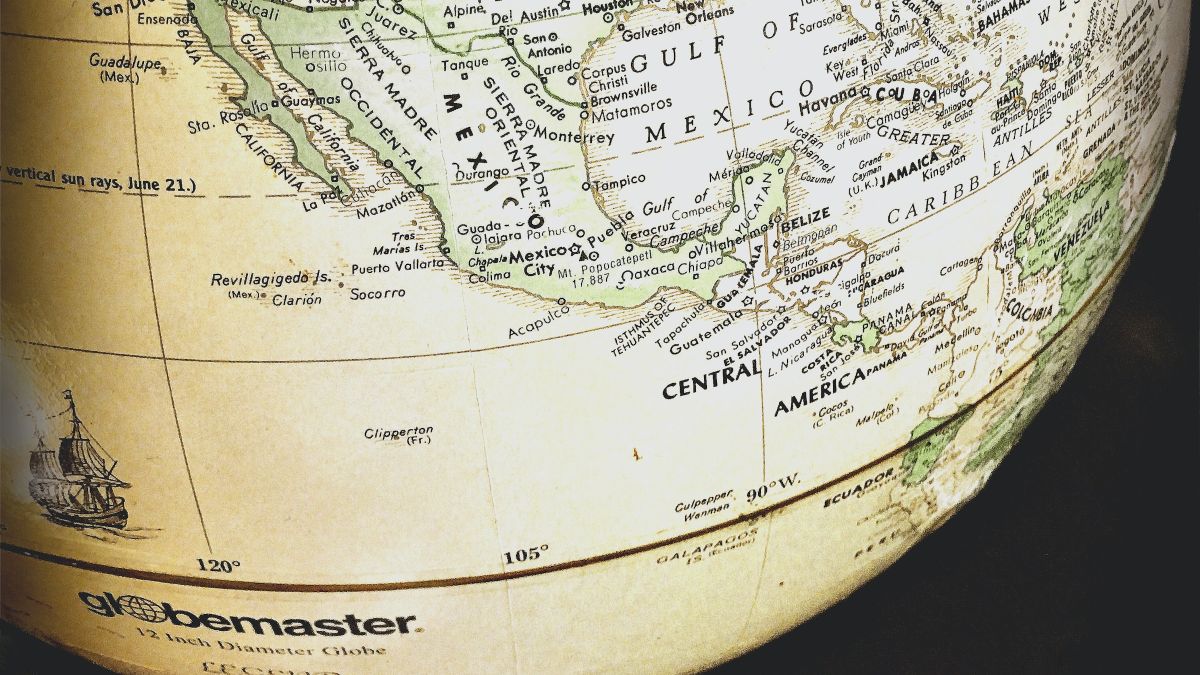
Geopolitical uncertainty, remote work, and international diversification are changing how globally mobile entrepreneurs and investors think about geography, banking, and business. In this article, Caye International Bank president Luigi Wewege examines why countries like Belize and Panama are becoming more attractive in an increasingly fragmented global economy.
For much of the modern era, global finance and international business were heavily concentrated in a relatively small number of dominant economies and financial centers. The assumption was straightforward: stability, institutional strength, and economic opportunity were most reliably found within the world’s largest and most established markets. Today, however, that assumption is increasingly being reconsidered.
Geopolitical tensions between major powers are rising. Trade relationships have become more politicized. Sanctions regimes continue to expand, while banking systems in many developed economies face growing regulatory and compliance pressures. At the same time, remote work, digital entrepreneurship, and technological advancements are fundamentally changing how and where people can live, work, invest, and operate businesses.
As a result, internationally mobile entrepreneurs, investors, and globally focused families are beginning to think differently about geography, diversification, and long-term strategic positioning. Increasingly, attention is turning toward smaller, internationally connected jurisdictions that offer flexibility, stability, and global access outside the world’s traditional power centers.
The Old Assumption Was That Bigger Was Safer
For decades, businesses and investors largely followed the gravitational pull of major economies. Global financial activity concentrated around traditional banking hubs and large capital markets, while multinational companies expanded toward the world’s biggest commercial centers.
Large economies offered scale, liquidity, infrastructure, and institutional confidence. For many, they represented the default choice for investment, banking, business expansion, and wealth preservation. While those advantages remain significant, the global environment has become more complex and less predictable than it was even a decade ago.
Why Flexibility and Diversification Matter More Today
One of the most significant changes in recent years is the way diversification itself is being redefined. Traditionally, diversification focused primarily on investment portfolios. Today, many internationally minded individuals are thinking more broadly. They are increasingly diversifying where they bank, where they establish residency, where they hold assets, where they structure businesses, and where they spend significant portions of their time. This shift is being driven by several overlapping trends.
Political polarization has intensified in many major economies. Inflation and debt burdens remain elevated in parts of the developed world. Regulatory environments continue to evolve rapidly, while sanctions and geopolitical disputes increasingly affect global commerce and financial systems. At the same time, technology has dramatically reduced geographic constraints. A growing number of entrepreneurs and professionals can now operate internationally while living far from the traditional financial capitals that once dominated global business activity.
Remote work and digital business models have accelerated this transformation. Increasingly, flexibility and optionality are being viewed as strategic advantages rather than luxuries. This trend is not necessarily driven by fear or instability alone. In many cases, it reflects prudence. In a world that is becoming simultaneously more interconnected and more fragmented, many globally mobile individuals are seeking resilience through diversification across multiple jurisdictions.
Why Smaller Countries Are Gaining Attention
As these shifts continue, smaller jurisdictions are beginning to attract greater international attention. In many cases, their appeal lies precisely in the fact that they are not at the center of major geopolitical rivalries or ideological confrontations. Large powers increasingly face complex political disputes, abrupt regulatory shifts, sanctions exposure, and growing financial system pressures.
Smaller countries, while not immune to global risks, can sometimes offer greater agility and adaptability. Countries that maintain political stability, international connectivity, business-friendly regulatory environments, and openness to foreign investment are increasingly positioning themselves as attractive alternatives for globally mobile businesses and investors.
In this environment, agility can become a competitive advantage. Rather than competing directly with the world’s largest economies, some smaller jurisdictions are carving out specialized roles within international finance, logistics, cross-border commerce, and wealth diversification.
Why Belize and Panama Are Part of This Shift
In Central America, Belize and Panama are increasingly notable examples of this broader trend.
Panama has already established itself as one of Latin America’s most important logistics and financial hubs. The Panama Canal remains one of the world’s most strategically significant trade routes, while Tocumen International Airport has developed into one of the region’s leading aviation hubs connecting North America, South America, Europe, and the Caribbean. The country’s dollarized economy, sophisticated banking sector, multinational business presence, and international connectivity have helped position Panama as a gateway between regions and a center for international commerce.
Belize, while much smaller in scale, possesses a different but increasingly relevant set of advantages. As an English-speaking jurisdiction with close proximity to North America and a long-established international financial services sector, Belize has steadily attracted interest from retirees, internationally mobile entrepreneurs, and investors seeking diversification across jurisdictions. Importantly, the modern appeal of countries such as Belize is no longer rooted in outdated perceptions surrounding secrecy or opacity. The international financial environment has evolved significantly over the past two decades, with far greater emphasis on compliance, transparency, and international regulatory cooperation.
Today, internationally oriented financial planning is increasingly centered around lawful diversification, cross-border efficiency, asset protection, and geopolitical risk management within fully compliant international frameworks.
At the same time, both Belize and Panama benefit from broader regional trends that continue to strengthen Central America’s position internationally. Geographic proximity to North America, relatively competitive operating costs, improving connectivity, and growing international mobility are all contributing to rising interest in the region.
The competition for globally mobile talent, investment, and entrepreneurship is also intensifying. Increasingly, countries are recognizing that internationally mobile individuals bring not only capital, but also expertise, business networks, innovation, and long-term economic activity.
The Challenges Smaller Countries Still Face
At the same time, smaller jurisdictions still face important challenges. Infrastructure gaps remain a reality in parts of the region, while bureaucracy and regulatory inefficiencies can still create obstacles for businesses and investors. Smaller labor markets may limit scalability in some industries, and international compliance scrutiny remains intense across the global banking sector.
Reputation and institutional credibility also matter significantly. Countries seeking to attract international business and investment must continue strengthening transparency, regulatory standards, infrastructure, and long-term economic stability. Not every jurisdiction will be equally successful in adapting to these global shifts.
Conclusion
The global economy is becoming more decentralized, both financially and geographically. As geopolitical tensions, technological change, and international mobility continue reshaping global business, many investors, entrepreneurs, and internationally focused families are rethinking long-standing assumptions about where opportunity, stability, and resilience can be found.
In this environment, countries like Belize and Panama are increasingly becoming part of a larger global conversation around diversification, connectivity, and strategic positioning. For smaller jurisdictions willing to invest in stability, credibility, and international engagement, the opportunities created by this evolving global landscape may continue to grow in the years ahead.
Luigi Wewege is the President of Caye International Bank, headquartered on the island of Ambergris Caye, Belize. He is also the published author of The Digital Banking Revolution, now in its third edition.