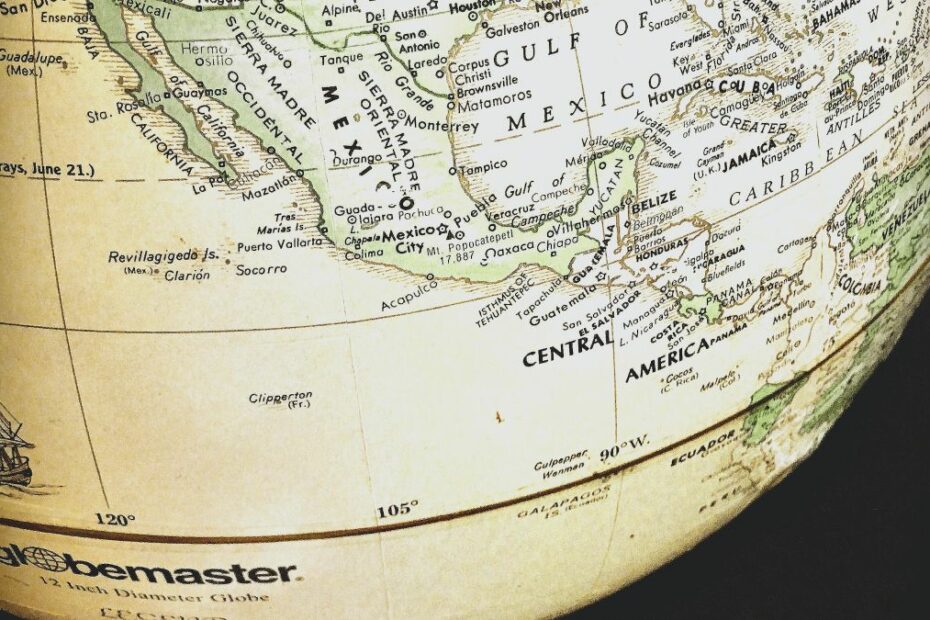
A country-by-country look at residency by investment in Central America. Whether you’re buying real estate, putting money into a business, backing a forestry project, or sitting on a million dollars in crypto, there’s a way into Central American life for you.
If you’re moving south to Central America and want legal residency in any of the seven countries, you have a few options depending on your circumstances.
Many expats of a certain age go the pensionado route, where you only need to show proof of a pension. Each country sets its own minimum monthly amount, and we cover them all in our guide to pensionado residency in Central America.
Other options include marrying a local or having a child in the country, either of which will qualify you for residency in every country. But unless you’re in a real, serious relationship with someone, the marriage route is extreme and fraught with problems.
Having a child is doable, and lots of gringos end up having their babies in this part of the world, but we hope you’re not getting pregnant for the sole purpose of getting residency. We don’t need to tell you what a bad idea that would be.
Other Options
Then there are the various rentista options, where you need to show a guaranteed source of income. As with the pensionado route, the minimum monthly amount varies by country. This is the best bet for most younger expats, especially if you work remotely as an employee or a freelancer, and it’s easy to make work with the help of decent lawyers.
But what if you’re coming to Central America with a plan? What if you want to put money into a country, whether by building a business, investing in one, buying property, or something else?
If so, you’re looking for investment residency. Rest assured, every country in Central America wants your money and will welcome you. Below, we look at the options for investors country by country. Several of the rules have changed in the past year, so check the details with a local immigration lawyer before you commit any money.
Belize
Belize is the only country in Central America which doesn’t offer a residency category with “investor” in the name. What the rest of the region calls “residency by investment”, Belize calls “temporary residency”, which is confusing if you’re comparing countries. In the rest of Central America, temporary residency is simply the stage before permanent residency, but in Belize “temporary” means you don’t have to live there full time.
So temporary residency in Belize is, in effect, for residency for investors with commitments outside the country. If you’re seeking residency through investment in Belize, you’re looking at temporary residency. Otherwise, you go for permanent residency or the QRP (Qualified Retired Persons) initiative.
If you show evidence of investing at least BZ$500,000 (US$250,000) in the country, you’ll get temporary residency. That includes buying real estate. The catch is that temporary residency lasts a year, you renew it every year for as long as your investment stays in the country, and it never turns into permanent residency. For that, you still need to live in the country for a year, leaving for no more than 14 days in total.
In December 2025, the government approved a proposal that would let investors putting in BZ$500,000 skip that year and go straight to permanent residency, but as of now, nothing has been written into law.
Costa Rica
Costa Rica’s “inversionista” program is one of Central America’s best residency options for investors.
It’s no secret Costa Rica is by far the most popular country in the region for expats and foreign investment, especially in tourism. Costa Rica is Central America’s most-visited country, making it a worthwhile place to invest in.
To that end, potential investors in Costa Rica have choices about where to put their money. For a minimum of $150,000, they can get temporary residency by putting their money into any one of the following “qualifying projects”:
- Setting up a new business
- Buying an existing business (or putting at least $150,000 into an existing business)
- Buying real estate and/or vehicles (as long as it adds up to at least $150,000 and the property is in your own name, not a company’s, you’re good to go)
If you’re investing in any kind of forestry project in Costa Rica, from lumbering (teak investments were a big thing in Costa Rica a few years ago) to preservation, you can get residency with a $100,000 investment rather than $150,000.
There’s a catch, though. The $150,000 minimum came in with Law 9996 in 2021, part of a push to make Costa Rica easier to invest in after the pandemic, and it also gave investors tax breaks on importing household goods and vehicles. The law came with a five-year window, and when that closed in July 2026, the tax breaks went with it. A lot of people now say the minimum went back up to $200,000 too, but, as of October 2026. Migración’s (Costa Rica’s Department of Immigration) own website still says $150,000, and some lawyers argue the law only put a time limit on the tax breaks, not the investment amount. Until Migración officially clears this up, check with your lawyer which figure applies before you commit any money.
El Salvador
El Salvador has two very different routes for investors. The official one, residencia temporal como inversionista (temporary residency as an investor), is for serious money: an investment of at least 4,000 times the monthly minimum wage, which currently works out at around $1.6 million, registered with the government’s National Investment Office.
Most people go the other way. If you’re a shareholder, board member, or legal representative of a Salvadoran company that’s actually doing business, you can get residency on that basis, and there’s no set amount you need to invest. That means you can buy or build, say, a hotel in El Salvador and you’ll get residency, granted for up to two years at a time. This is renewable and leads to permanent residency down the line, and after five years you can apply for citizenship.
And then there’s bitcoin. El Salvador famously made it legal tender in 2021, and although businesses no longer have to accept it, it can still buy you a way in through the Freedom Visa program, which is for the seriously wealthy only. You donate a cool million dollars in bitcoin or USDT, a stablecoin pegged to the dollar, and in return you get Salvadoran citizenship and a passport. It’s a donation, not an investment, so you don’t get the money back. They say it’s open to a thousand people a year, though the government has never said how many have actually signed up.
Guatemala
Guatemala is a country where it’s easy and inexpensive to get regular residency as a rentista. There’s no real hoops to jump through here, so it’s better to go that route if you’re earning a minimum of $1,250 a month outside of the country.
But if you invest a minimum of $100,000 into a business, real estate, or government bonds in Guatemala, you can get residency in the country as an investor. It starts as temporary residency, and after five years you can switch to permanent.
Honduras
Investor residency in Honduras means putting at least $50,000 into a Honduran business, either by investing in an existing company or by setting up and registering your own. Unlike other countries, you can’t simply buy a house and call that your investment.
You’ll need to have the first $25,000 transferred into Honduras at the time of application, with an idea of when the remaining $25,000 will enter the country. If you’re setting up your own company, you’ll also need to present a business plan and a viable timeline of investment.
On top of the $50,000, you need to put a $5,000 refundable deposit into the Central Bank of Honduras. You’ll get this money back within a year, once you’ve shown the investment has been made.
Nicaragua
Aside from El Salvador’s business route, which doesn’t have a set minimum, Nicaragua is the cheapest country in the region to get residency by investment.
All you need to do is form a corporation and invest $30,000 into real estate, a local business (either an existing business or a new one), or into any Nicaraguan government-approved forestry or agricultural project. And that’s it. In Nicaraguan terms, it’s easy and straightforward, and you get permanent residency straight away.
Of course, it’s between you and your conscience if you want to back the odious Ortega/Murillo regime by investing in it. And it’s not just a moral question. The government has revoked foreigners’ permanent residency over things it considers political, including social media posts, and since January 2026, Nicaragua no longer allows dual nationality in most cases, so citizenship would mean giving up your own.
Panama
During the pandemic, Panama overhauled its Friendly Nations Visa, which until then had made it cheap and easy to get residency in Panama if you were from one of the “friendly countries” (there are now around 50 of them).
Nowadays, the Friendly Nations Visa is an offshoot of Panama’s Residence by Investment program. Under Friendly Nations, if you’re a citizen of one of the “friendly countries,” a real estate investment of $200,000 will get you in the door. Another way in is to have a job in Panama, as opposed to before, when you could register a corporation in Panama and list yourself as an employee. You can also put your $200k in a Panamanian bank for at least three years if you want. Either way, you get two years of temporary residency before you can apply for permanent.
Elsewhere in the Residence by Investment program, you can go the Qualified Investor route, which gets you permanent residency straight away. The rules changed in September 2026. You can still get in with $300,000 in real estate, but only if it’s new property bought from a developer. Buy a resale property and you’ll need $500,000. If you’re buying off-plan, the building has to be finished and registered in your name within three years. The other options are $500k in the Panamanian stock market, or a fixed-term deposit of $750k in a private Panamanian bank, or $500k at the state-owned Banco Nacional or Caja de Ahorros. If you signed a contract under the old rules before September 16, 2026, you have until mid-March 2027 to apply under them.
Another option, like in Costa Rica and Nicaragua, is the forestry route. You can get investor residency in Panama by investing at least $80,000 in government-approved forestry and teak growing projects.
Comparing Central America’s Investment Residency Options
Here’s how the seven countries stack up, first by how much you need to put in, then by how easy/straightforward the process is likely to be.
From cheapest to most expensive (in USD):
- El Salvador: No set minimum if you’re running a Salvadoran business. The passive investor route is around $1.6 million, though, and the Freedom Visa costs $1 million
- Nicaragua: $30,000
- Honduras: $50,000, plus a $5,000 refundable deposit
- Guatemala: $100,000
- Costa Rica: $150,000 or $200,000 depending on who you ask
- Panama: $200,000 under Friendly Nations, if you’re from one of the qualifying countries. Otherwise, $300,000 for new property under the Qualified Investor route
- Belize: $250,000
From most straightforward to most confusing:
- Nicaragua: The simplest on paper, with a low minimum and permanent residency straight away. Whether you want to deal with the government is another matter
- Guatemala: One figure, and you can put it into a business, property, or government bonds
- Honduras: One figure and clear rules, as long as you’re investing in a business rather than buying a home
- Panama: Plenty of options and clear rules, but they changed in September 2026, and the details now matter more, from new versus resale property to how long an off-plan building takes to finish
- Costa Rica: The process itself is well established, but nobody official will say whether the minimum is $150,000 or $200,000
- Belize: “Temporary” doesn’t mean what it means everywhere else, the investor permit never leads to permanent residency, and the promised fix still isn’t law
- El Salvador: Several overlapping routes, a crypto program with two names, and very little official information on how any of it works in practice.
Cheapest and simplest doesn’t necessarily mean best, of course. Costa Rica, Panama, and Belize sit toward the expensive end, but they’re also where most North American and European expats want to live, unless they’re after something off the beaten path. And most of these routes lead to citizenship eventually, usually after five to seven years in the country. The exception is El Salvador’s Freedom Visa, the one way in the region to buy citizenship outright.