How useful is TikTok for planning travel in Central America? Here’s what the platform gets right, what it gets wrong, and what travelers should verify.
Like it or not, TikTok is one of the main ways people discover places to travel nowadays, and Central America is well suited to that kind of platform. This is a region of volcanoes, waterfalls, tropical beaches, jungles, colonial towns, islands, and mountains, all packed into relatively short distances. In a short video, Central America can look like a place where every road leads to a lookout, every beach feels hidden, and every town is full of color and atmosphere.
That visual strength is part of why Central America performs so well on TikTok. The problem is that short form travel content is built to inspire, not explain. A 20-second clip can make a destination look easy, empty, cheap, or close by without showing the crowds, the weather, the road conditions, the travel time, or the practical realities on the ground. TikTok can be a genuinely useful way to get ideas and see what places look like in motion, but it also has a way of flattening context. In Central America especially, where distances, infrastructure, seasonality, and local conditions can vary more than a quick video suggests, that missing context matters.
@guatemala_travels 📍Orgulloso de ser GUATEMALTECO 🇬🇹 @🌎Así_Es_Guatemala🇬🇹 ♬ sonido original – Sergio Anthony
What TikTok Gets Right
For all its limitations, TikTok can be genuinely useful as a travel discovery tool. One of its biggest strengths is that it exposes people to places they might not otherwise have considered. A traveler may start out with only a vague idea of where to go, then quickly come across clips from surf towns in El Salvador, lake islands in Nicaragua, or less obvious corners of Costa Rica and Guatemala. In that sense, TikTok has helped broaden interest beyond the same small group of heavily promoted destinations.
It’s also better than static photos at conveying atmosphere. A short video can show how a beach actually looks in motion or whether a hotel has genuine character or simply photographs well from certain angles. For travelers trying to get a visual sense of a place, that can be invaluable. You can often learn more from a quick natural clip than from a polished promotional image.
TikTok can also help with practical visual research, even when that is not the creator’s main intention. Travelers may get a better sense of a destination simply by watching recent videos. That matters in Central America, where access and infrastructure can vary from place to place, and where seeing real conditions can sometimes be more useful than reading a description alone.
The platform’s influence has also grown on the business side of travel. As TikTok has become a more important discovery tool, hotels, tour operators, restaurants, and travel brands have had more reason to strengthen their presence there. That has helped drive interest in services like HighSocial, as businesses look for ways to reach a more relevant audience on a platform that now plays a real role in how people choose where to go.
What TikTok Gets Wrong
Where TikTok becomes less reliable is in everything that requires context. The platform is great at making places look appealing, but doesn’t work so well at showing what it actually takes to experience them. In Central America, that matters more than perhaps destinations in the developed world. Distances may look short on a map and even shorter in a video, but travel between destinations can take longer than people expect once road conditions, border crossings, boat transfers, or limited transport schedules are factored in. A multi stop itinerary can look smooth on screen while being far less straightforward in real life.
TikTok also tends to flatten seasonality. A beach, waterfall, or jungle viewpoint may look perfect in a clip without any indication of when it was filmed. That can be misleading in a region where rain, heat, visibility, surf, water levels, and road access can vary sharply depending on the time of year. A place shown under clear skies in one video may feel very different in the middle of the wet season, and a waterfall or coastal stretch that looks ideal one month may be less impressive or less accessible in another.
It’s also worth bearing in mind that TikTok often makes places look emptier, easier, and more exclusive than they really are. A sunrise drone clip or carefully framed shot can make a beach or lookout seem peaceful and undiscovered even when it is busy later in the day or regularly crowded in high season. The platform also rarely explains price, infrastructure, or comfort levels. A destination may look effortless on screen without showing rough access roads, steep climbs, limited services, inconsistent transport, or the fact that reaching it comfortably may require more time and money than viewers assume. That is where TikTok works best as inspiration, but falls short as guidance.
How Travelers Should Actually Use TikTok
The most sensible way to use TikTok is as a starting point, not a planning tool. It can be good for spotting places worth looking into, getting a rough visual feel for a destination, and noticing hotels, beaches, towns, or activities that might not have been on a traveler’s radar. But that’s where its role should begin to end.
Once a place has caught someone’s interest, the next step should be to check the things TikTok usually leaves out. How long does it actually take to get there? What is the weather like at that time of year? Is the destination easy to get to without a car? Does it suit the kind of trip being planned, or does it just look good in a short video? Those are the questions that matter more than whether a clip is appealing.
That’s important in Central America, where practical differences between destinations can be significant. Two places can look equally straightforward online while involving very different travel times, budgets, road conditions, or comfort levels on the ground. TikTok can be a useful way to narrow the field, but it should be followed by proper research before any real decisions are made.
The Central America Destinations TikTok Shows Most Often
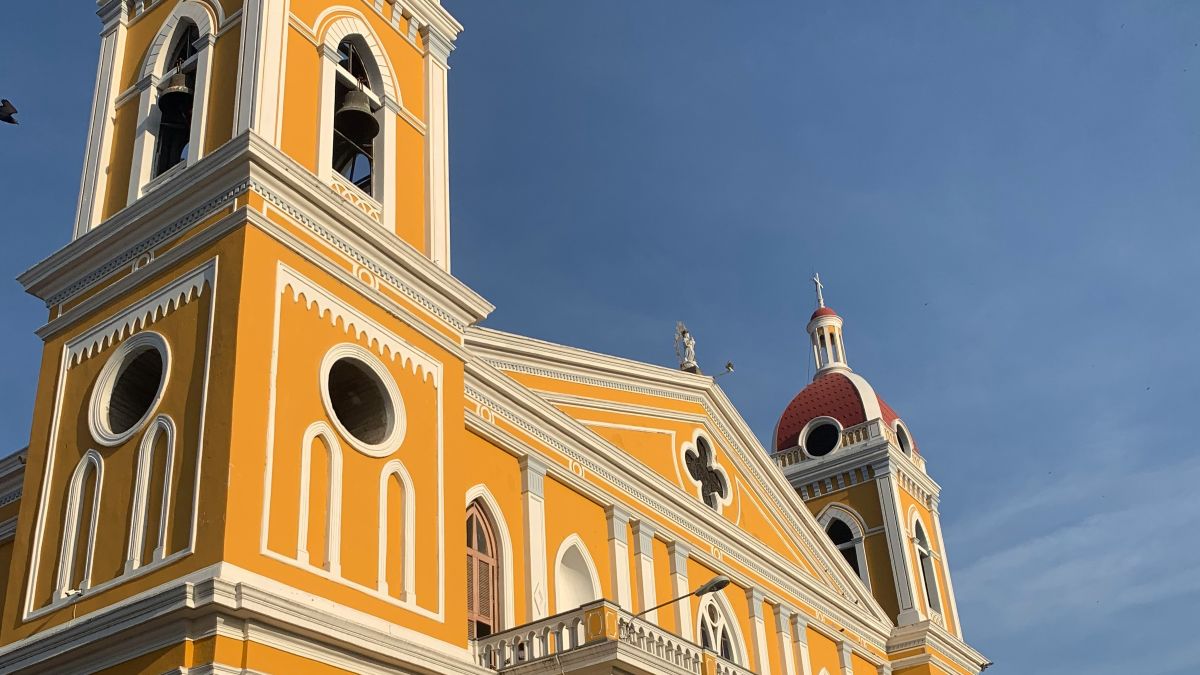
Certain destinations appear far more often than others in TikTok travel content about Central America. In Guatemala, Antigua and Lake Atitlán are the two most recognizable examples. Both are highly photogenic and immediately legible on screen, with colonial streets, rooftop views, lakeside cafés, volcano backdrops, and dramatic sunsets that work well in short video. Nicaragua also has a couple of regular TikTok favorites, especially Ometepe, whose twin volcanoes rising from the lake make for one of the region’s most distinctive visual signatures, along with Granada, which often appears in broader backpacking and itinerary content.
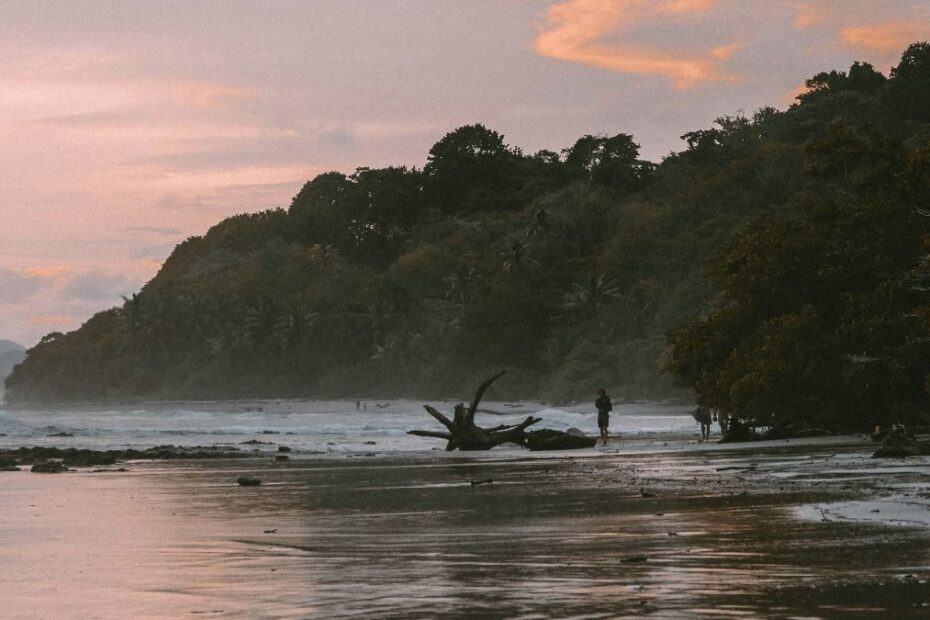
Elsewhere in the region, El Salvador TikTok content tends to gravitate toward El Tunco and nearby surf spots, where black sand, sunsets, and beachfront nightlife are easy to package into short clips. Belize content often centers on island scenery and clear Caribbean water, while in Panama, Bocas del Toro shows up far more often than most other destinations. Costa Rica’s TikTok image is also fairly predictable, usually built around surf communities like Santa Teresa, waterfalls, wildlife, jungle lodges, and other places that already perform strongly across visual travel media.
That doesn’t mean these destinations are overrated or wrongly featured. Many are popular for good reason. But it does mean TikTok tends to present a narrower, more visually curated version of Central America than the region actually offers. Certain places come to stand in for entire countries, while destinations that are less instantly cinematic or less established on the backpacker trail receive far less attention. For travelers using the platform as a source of ideas, that is worth keeping in mind.
@adondeircostarica ♥️💦🇨🇷P U N T A U V A ♥️💦🇨🇷 Así de mágico es el caribe costarricense. 😍 Punta Uva pertenece a Talamanca de Limón y forma parte del Refugio de Vida Silvestre Gandoca-Manzanillo. La esencia de este paraje es que recrea a la perfección la esencia del Caribe tico. La arena tiene un tono casi dorado y la costa es adornada por las palmeras y los árboles que caen sobre la playa. En Verano el mar es cálido y tranquilo, sin ola alguna. Y el agua tan cristalina que se aprecian las rocas debajo del agua. Créditos video a nuestra amiga: @deyshabrown28 ¡Somos A Dónde Ir Costa Rica! 🇨🇷
Wrapping Up
Alongside Instagram, TikTok has become part of how many travelers now discover Central America, and that’s no bad thing. It introduces people to places they might not have considered, give a stronger sense of atmosphere than static images, and help smaller businesses and destinations get in front of a wider audience. But it also tends to reward the most visually immediate version of a place, which can leave out much of the context that actually shapes a trip.
For travelers, the most useful approach is to treat TikTok as a first look rather than a final word. It can be a good way to spot destinations, get a feel for them, and see what currently circulating travel content is highlighting. But it still needs to be followed by more grounded research on access, timing, cost, and whether a place is actually the right fit. Used that way, TikTok can be a helpful part of planning travel in Central America. Used on its own, it can leave people with a version of the region that is more visually compelling than practically accurate.