Central America is home to some of the world’s most important wetlands, including freshwater lagoons, mangrove forests, and vast estuaries. These are the best wetlands in Central America to visit for wildlife, birdwatching, and unforgettable nature experiences.
Central America gets plenty of credit for its beaches and rainforests. Its wetlands, though, get almost none, which is strange, because some of the best wildlife-watching in the region happens in a lagoon or mangrove channel rather than on a hiking trail.
If you’re the kind of traveler who plans a trip around wildlife, wetlands deserve a place on your itinerary. Open waterways, marshes, and mangrove channels make animals much easier to spot than they often are in dense rainforest. Birds gather along exposed shorelines, crocodiles bask on riverbanks, monkeys feed in trees overhanging the water, and many of Central America’s most memorable wildlife experiences happen from the deck of a slow-moving boat. Manatees, jaguars, crocodiles, howler monkeys, and millions of migratory birds all depend on these ecosystems.
This guide highlights some of our favorite wetlands in Central America: what makes each one worth visiting, what you’ll see, and how to get there. Every destination featured here is also a Ramsar site, recognized internationally for its ecological importance. For travelers already exploring the region, many of them are surprisingly accessible with little more than a local guide and a boat.
What is a Ramsar Site?
A Ramsar site is a wetland recognized under the Convention on Wetlands, an international treaty signed in Ramsar, Iran, in 1971. It’s the world’s only global treaty dedicated to a single type of ecosystem, created in response to the rapid loss of wetlands throughout the 20th century as they were drained for agriculture or dismissed as wasteland.
Wetlands are among the planet’s most important ecosystems. They filter water, help reduce flooding, store vast amounts of carbon, and provide essential habitat for countless species of birds, fish, mammals, reptiles, and amphibians. Many migratory animals, including millions of shorebirds that travel through Central America each year, simply couldn’t survive without them.
All seven Central American countries are parties to the convention and, together, have designated dozens of Ramsar sites covering millions of hectares of mangrove forest, freshwater marsh, estuary, and river delta. A Ramsar designation doesn’t just mean a place is pretty. It means it’s been formally recognized as a wetland of international importance and is considered worthy of long-term protection.
View this post on Instagram
Belize
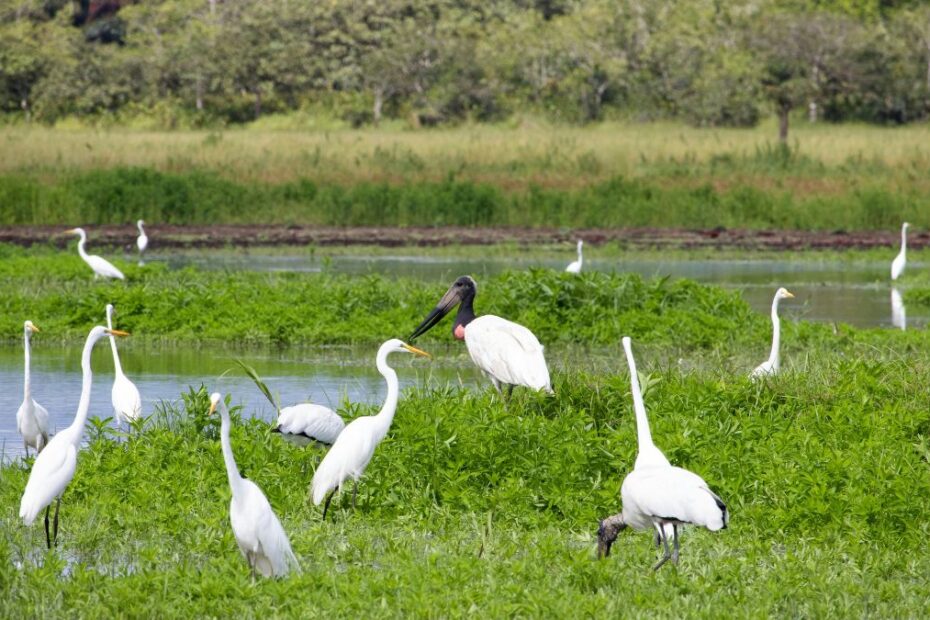
Belize has just two Ramsar sites, and both are well worth a visit. Crooked Tree Wildlife Sanctuary, around an hour north of Belize City, is the better known of the two. This network of shallow lagoons, creeks, and seasonal marshes has earned a reputation as one of the best places for birdwatching in Central America. Boat tours regularly spot herons, egrets, crocodiles, and the occasional howler monkey, but the biggest attraction is the Jabiru stork, the largest flying bird in the Americas, which gathers here during the dry season. Wildlife is generally at its best between February and May, when falling water levels concentrate birds and other animals into the shrinking lagoons.
Sarstoon-Temash National Park, in the far south of Belize on the Guatemalan border, offers a completely different experience. Reached only by boat, this remote wilderness protects the country’s largest remaining stand of red mangrove alongside seasonally flooded forest, saline lagoons, and salt marshes. Jaguars, ocelots, Baird’s tapirs, howler and white-faced capuchin monkeys all live here, while more than 200 bird species have been recorded. The park is also co-managed by Kekchi Maya and Garifuna communities, making it as culturally significant as it is ecologically important. Punta Gorda is the most practical base for visiting.
View this post on Instagram
Costa Rica
Costa Rica has 12 Ramsar sites, but if you’re only going to visit one, make it Caño Negro Wildlife Refuge. This shallow freshwater lagoon and its surrounding marshes are among the best places in the country to experience wildlife from the water. Boat tours regularly spot caimans, howler monkeys, iguanas, and an impressive variety of resident and migratory birds, including the endangered Jabiru stork. Located in northern Costa Rica near the Nicaraguan border, Caño Negro also makes an easy day trip from La Fortuna or Arenal on your Sundowner Holidays itinerary.
If your travels take you to Guanacaste, Palo Verde National Park is another excellent choice. Centered on the Tempisque River and its surrounding lagoons, marshes, and mangroves, it’s one of Costa Rica’s best places to see large concentrations of waterbirds. Visit during the dry season, when falling water levels draw thousands of herons, storks, spoonbills, ducks, and other wetland species into the remaining waterways.
View this post on Instagram
El Salvador
El Salvador has eight Ramsar sites, but Bahía de Jiquilisco is the standout. The country’s largest protected wetland is a vast network of estuaries, mangrove forests, canals, sandbars, and small islands stretching along the Pacific coast in Usulután. Boat tours through the mangrove channels offer excellent opportunities to spot herons, egrets, kingfishers, and other coastal birdlife, while the surrounding beaches are among the most important nesting grounds in the eastern Pacific for green, hawksbill, olive ridley, and leatherback turtles.
Bahía de Jiquilisco is less than two hours from San Salvador, making it an easy overnight trip. Small hotels and eco-lodges are scattered around the bay and nearby beach communities. Turtle nesting season generally runs from August through December, while the dry season between November and April offers easier access and comfortable conditions for exploring the wetlands.
View this post on Instagram
Guatemala
Laguna del Tigre National Park is Guatemala’s largest Ramsar wetland and one of the last true wilderness areas in Central America. Covering more than 335,000 hectares in the heart of the Maya Biosphere Reserve, it provides refuge for jaguars, Baird’s tapirs, Morelet’s crocodiles, scarlet macaws, and countless other species. Most visitors stay at Estación Biológica Las Guacamayas, which offers access to boat trips, forest trails, and nearby Maya ruins. Flores is the usual gateway, while the dry season between November and April offers the most reliable access.
Guatemala’s Caribbean coast offers a very different wetland experience. Reached by boat from Puerto Barrios, Punta de Manabique protects mangroves, lagoons, and one of the country’s most unspoiled stretches of coastline. It’s an important refuge for manatees, crocodiles, jaguars, and a wide variety of resident and migratory birds, making it well worth considering if your travels take you to eastern Guatemala.
View this post on Instagram
Honduras
If seeing a manatee is high on your wildlife wish list, Cuero y Salado Wildlife Refuge is one of the best places in Central America to check out. Located near La Ceiba on Honduras’ Caribbean coast, this network of rivers, canals, mangroves, and flooded forest was established to protect the endangered West Indian manatee, while also providing habitat for crocodiles, caimans, monkeys, and a wide variety of resident and migratory birds.
Getting there is part of the experience. Visitors traditionally ride a small rail cart along a disused banana railway before transferring to a boat for the journey through the refuge’s quiet canals. It’s one of Honduras’ most memorable wildlife excursions and an easy addition to an itinerary that includes La Ceiba or the Bay Islands.
View this post on Instagram
Nicaragua
Southern Nicaragua is home to Los Guatuzos Wildlife Refuge, one of the country’s richest wetland ecosystems. Centered on the rivers, lakes, and seasonally flooded forests bordering the Río San Juan, it’s home to more than 300 bird species, along with howler and spider monkeys, caimans, river turtles, and countless other animals. The refuge also forms part of the same internationally important wetland system as Costa Rica’s Caño Negro, allowing wildlife to move freely across the border.
Most visits begin in San Carlos, at the southern end of Lake Nicaragua, where boat tours head into the refuge’s rivers and lagoons. The dry season, generally between December and April, offers easier navigation and some of the best wildlife viewing as water levels begin to fall.
View this post on Instagram
Panama
If your travels take you to Bocas del Toro, San San-Pond Sak is one of Panama’s most rewarding wetlands to explore. This network of mangroves, coastal lagoons, rivers, and beaches near the Costa Rican border provides habitat for manatees, crocodiles, sea turtles, and more than 130 bird species. Boat tours are the best way to experience the wetland, offering a chance to explore quiet waterways while keeping an eye out for wildlife. Its location also makes it an easy addition to a Bocas del Toro itinerary.
For something completely different, Bahía de Panamá proves that you don’t have to leave the capital to experience one of the hemisphere’s most important wetlands. Every year, between one and two million migratory shorebirds stop here along the Pacific Flyway, making it one of the most significant migration sites in the Americas. Just a short drive from downtown Panama City, it’s an excellent excursion for birdwatchers or anyone wanting to experience a remarkable wildlife spectacle without venturing far from the city.
View this post on Instagram
Which Wetland Is Right for You?
- Best for birdwatching: Crooked Tree Wildlife Sanctuary (Belize)
- Best wildlife boat trip: Caño Negro Wildlife Refuge (Costa Rica)
- Best for sea turtles: Bahía de Jiquilisco (El Salvador)
- Best remote wilderness: Laguna del Tigre National Park (Guatemala)
- Best chance of seeing a manatee: Cuero y Salado Wildlife Refuge (Honduras)
- Best day trip from a major tourist destination: Palo Verde National Park (Costa Rica)
- Best if you’re staying in a city: Bahía de Panamá (Panama)
Final Thoughts
Wetlands rarely make the front cover of a travel brochure, but they offer some of the richest wildlife experiences in Central America. You might be hoping to spot Jabiru storks, manatees, or sea turtles, or simply spend a few quiet hours exploring mangrove channels by boat. Whatever draws you there, these are places where slowing down is usually rewarded with unforgettable encounters.
These are our favorite wetlands in Central America, not a definitive list. Except for Belize, every country has other Ramsar sites worth exploring, but these are the ones we’d recommend to most travelers. Visit them, support the local communities and guides who help protect them, and you’ll discover one of Central America’s best-kept travel secrets.