A practical guide to mail in Central America, covering post offices, international packages, EMS, private couriers, Miami forwarders, and more.
Most of us don’t send or receive much physical mail anymore. Bills arrive by email, bank statements live online, and keeping in touch with people certainly doesn’t require a stamp.
Living abroad, though, has a habit of producing situations where something still needs to arrive physically. It might be a new bank card, an official document, something you’ve bought online, or simply a package from family back home. And sooner or later, you might also need to send something in the other direction.
That’s when an obvious question comes up: how does mail actually work in Central America?
All seven countries have national postal services, but sending and receiving mail isn’t necessarily the same experience you’re used to back home. Depending on where you live and what you’re sending, the answer might involve the local post office, registered or express mail, a private courier, a PO box, or a forwarding address in Miami.
Your Options for Sending and Receiving Mail in Central America
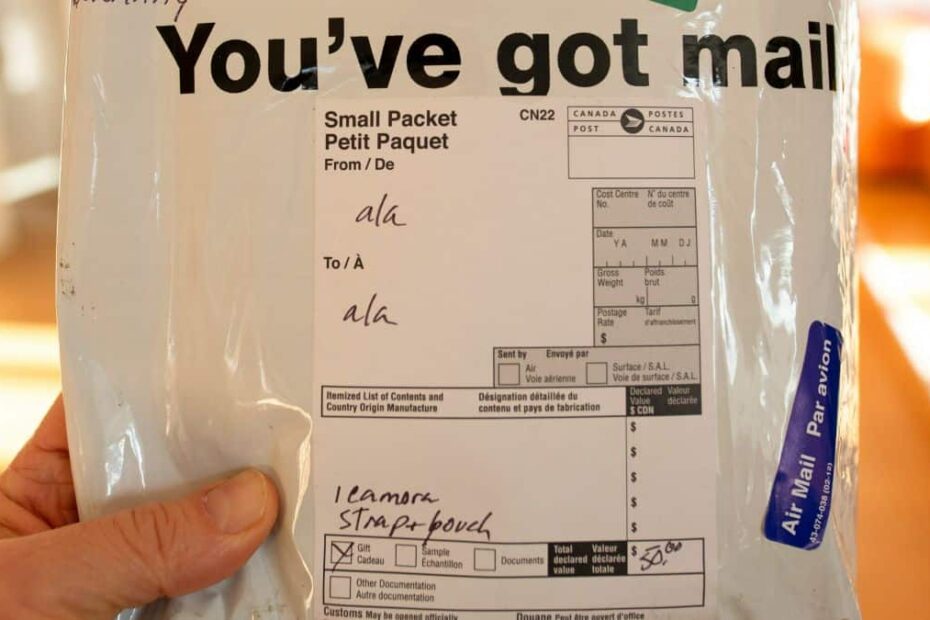
All seven Central American countries have national postal services that handle international mail, including registered or express options when tracking or confirmation of delivery matters.
For anything important, tracking and proof of delivery are worth having. If you’re dealing with mail in the United States, for example, USPS Certified Mail provides proof that an item was mailed and records its delivery or attempted delivery. Americans living abroad can use online certified mail labels when they need this type of service for documents or correspondence being sent through the US postal system.
Beyond the national postal services, private couriers and mail forwarding companies provide other ways to get letters, documents, and packages into and out of Central America.
How Mail Works Across Central America
Belize
The Belize Postal Service handles domestic and international letters and parcels, with registered mail and Express Mail Service (EMS) available when you need something more secure or traceable. Registered mail is particularly useful for important documents: you receive a registration number for online tracking, and the recipient signs for the item on delivery, providing proof that it arrived.
Belize Postal Service also offers PO boxes if you’d rather collect your mail than have it sent to your home. The postal service operates branches around the country, including Belize City and the district towns, so exactly how you collect or receive mail will depend partly on where you live.
If you’re receiving something important from overseas, ask the sender to use a service with international tracking.
Costa Rica
Correos de Costa Rica has more than 100 branches around the country and handles ordinary and registered mail as well as domestic and international EMS. International EMS can be sent to more than 50 countries, includes tracking, and has published delivery estimates of four to 13 business days depending on the destination.
Receiving mail at home can take some getting used to, particularly given Costa Rica’s famously unconventional address system. Street names and house numbers aren’t always part of the equation, and addresses in Costa Rica (and pretty much the rest of the region too, in fairness) often rely instead on distances and directions from well-known local landmarks.
Correos can deliver to a physical address, a postal box, or a post office for collection, with some areas subject to delivery restrictions. You can also rent an apartado postal at a particular branch if you’d rather collect your mail there.
For mail and purchases coming from the United States, another option is Box Correos. This gives you a Miami address where items can be received before being forwarded to Costa Rica, with Correos handling the import process and delivery once they arrive.
El Salvador
Correos de El Salvador handles domestic and international letters, documents, and packages through its network of post offices. For anything that needs to move quickly, EMS offers international tracking and estimates delivery at five to six days to the United States and six to eight days elsewhere. There’s also Docuexpress, specifically for documents, with tracking and estimated delivery of 24 to 72 hours depending on the destination.
International packages may be held by customs depending on what’s inside and its value. You may be asked for identification, an invoice, or other supporting paperwork before the package is released. Correos currently offers both collection from a postal branch and home delivery for incoming packages.
This account of picking up an international package in El Salvador gives a good idea of what the customs and collection process can involve when duties are due or paperwork is missing. For straightforward letters and documents, though, the process is considerably simpler.
Guatemala
You can send and receive both letters and packages through Correos de Guatemala. Outgoing international shipments are currently accepted at selected post offices, including locations in Guatemala City, Antigua Guatemala, Quetzaltenango, Puerto Barrios, Cobán, Huehuetenango, and San Marcos. Check the current list before visiting a branch, as international service isn’t available everywhere.
Incoming international letters and packages are distributed through the national postal network and can be tracked online when sent with a tracking number. If a package is held by customs, Correos offers a remote clearance service that allows you to submit the required information and authorize the postal service to handle the process. Once cleared and any applicable taxes are paid, the package can continue to its destination.
Honduras
Honduras’s national postal service, HONDUCOR, handles letters and packages within Honduras and internationally. For important shipments, EMS is the main express option, providing tracking for both documents and packages. Registered mail is also available, including an acknowledgment-of-receipt service where the recipient signs for the item and confirmation is returned to the sender.
For packages, HONDUCOR offers regular small-package services as well as EMS. In June 2026, it also launched Ultra Express for correspondence and packages being sent to the United States, with door-to-door delivery and tracking.
International mail can also be received through HONDUCOR, including packages and online purchases sent from overseas.
Nicaragua
Correos de Nicaragua handles international letters and packages, with EMS available when you want to send documents or parcels using a tracked express service. The postal service also has separate online tracking for EMS and other international packages.
You can receive international mail and packages in Nicaragua as well. Correos specifically handles the local distribution of purchases arriving through online retailers like Amazon, eBay, AliExpress, and Wish. Correos also offers apartados postales, or PO boxes, if you’d rather collect your mail than use a home address.
Nicaragua uses five-digit postal codes, with individual codes covering municipalities, urban neighborhoods, and rural districts. Correos has an online postal-code directory, so it’s worth checking the correct code before having something sent to you rather than relying solely on the kind of landmark-based directions commonly used for getting around.
Panama
Correos Panamá handles letters and packages through more than 100 post offices around the country. International options include regular mail, registered mail, parcels, and EMS for faster shipments. Registered items receive a tracking number, while an acknowledgment-of-receipt service is available if you need signed confirmation that something was delivered.
Receiving packages through the postal system is also possible. Tracked international shipments can be followed online and are sent to the post office serving the address on the package. Merchandise entering Panama may be held for customs processing before being released. PO boxes are another option if you’d rather collect your correspondence from a particular post office.
In 2026, Panama introduced a new geolocated postal-code system designed to identify individual homes and buildings more precisely. The change is intended to make home deliveries easier in a country where residential addresses have traditionally been difficult for postal services to use.
Post Office, Private Courier, or Miami Forwarder?
For ordinary letters and anything that isn’t particularly urgent, the national postal service is usually the simplest place to start. If you’re sending something more important, registered mail or EMS gives you tracking and, depending on the service, confirmation of delivery without necessarily paying private courier rates.
DHL, FedEx, and other international couriers make more sense when speed matters or you want detailed tracking and door-to-door handling. They’re generally more expensive than the post office, but that extra cost may be worthwhile for an urgent document, valuable package, or something that’s difficult to replace.
Miami forwarding services are mainly useful for receiving things from the United States. You receive a US address, usually in Florida, and anything sent there is forwarded to you in Central America. This works well for online purchases from retailers that don’t ship internationally, but can also be used for bank cards, documents, and packages sent by family or friends.
You might use all three at different times. Regular post may be perfectly adequate for one shipment, while an urgent document might justify a courier and your next online purchase might be easier to receive through Miami.
A Few Things Worth Knowing Before You Send Anything
Addresses in Central America don’t always work the way they do in North America or Europe, so check exactly how the postal service or courier wants the destination written. Postal codes are also worth checking even if you rarely use one in everyday life. Costa Rica, for example, has five-digit postal codes despite addresses still commonly relying on landmarks and directions, while Panama, as mentioned earlier, recently introduced a new postal code system.
Documents and merchandise aren’t necessarily treated the same way. A letter containing paperwork is generally more straightforward than a package containing goods, which may be subject to customs inspection, import duties, or requests for invoices and other information.
For anything important, use a service with tracking and keep the receipt and tracking number until it arrives. If you’re sending an original document, scan it first and check that the recipient actually needs the original rather than a digital copy.
Physical mail may be a much smaller part of everyday life than it once was, but it hasn’t disappeared. Sending or receiving mail in Central America becomes considerably less mysterious once you know which postal service, courier, or forwarding system people actually use where you live.