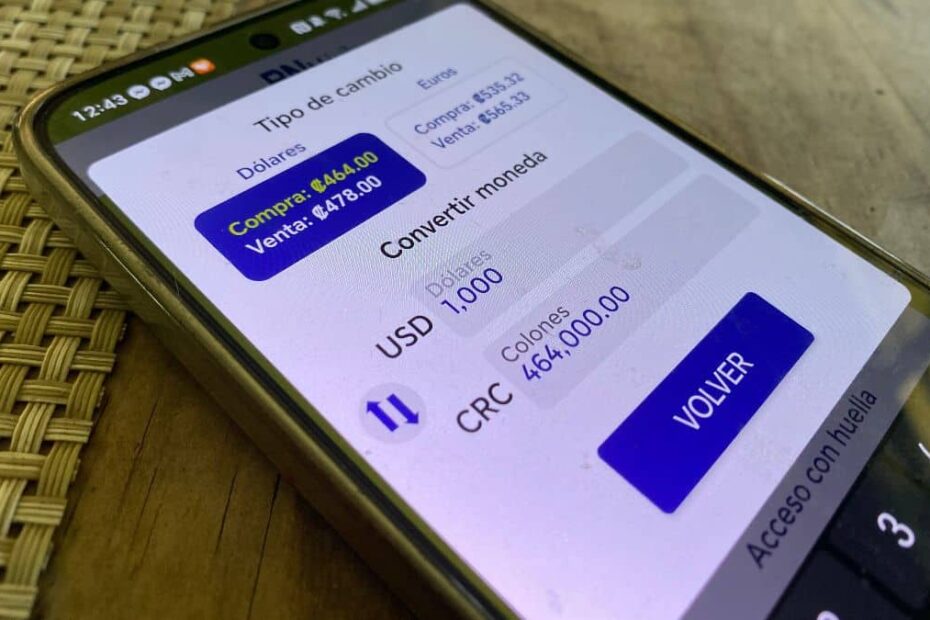
Costa Rica’s incoming president frames the exchange rate as structural and rules out executive intervention.
President-elect Laura Fernández has framed Costa Rica’s seemingly ever-strengthening-against-the-dollar colón as the result of a structural shift in the economy rather than a temporary seasonal fluctuation.
In recent remarks reported by La República, Fernández said the steady decline of the U.S. dollar in Costa Rica should not be interpreted as something tied to high tourism months. According to her, dollars are entering the country consistently throughout the year through exports, foreign direct investment, multinational operations, and services.
“Our economy has changed,” she said. “The Costa Rican economy now has a regular, non-seasonal amount of dollars in circulation, unlike before when it was linked to high tourist season. Now we have dollars every month, and even companies that pay salaries in dollars.”
Fernández also made clear that her administration will not interfere with the Banco Central de Costa Rica. The executive branch, she said, does not set the exchange rate, and political intervention would be dangerous. In other words, there should be no expectation of a government-directed effort to slow down the colón.
El dólar sigue cayendo y marca mínimos históricos en el país, impulsado por un flujo constante de divisas, inversión extranjera y exportaciones récord. 📊 💲 🇨🇷
¿Le beneficia o le preocupa un dólar cada vez más barato? 🤔
Conozca más sobre la opinión de la presidenta electa… pic.twitter.com/LTZpc3ke0O
— La República (@La_Republica) February 28, 2026
Who Benefits From a Strong Colón?
The mechanics of how the exchange rate effects life in Costa Rica are pretty straightforward. When the dollar falls and the colón strengthens, importers benefit. So do individuals who earn income in colones but have debts in dollars. They need fewer colones to purchase the same number of dollars.
If, for example, someone previously needed 680,000 colones to pay $1,000 in obligations, and now needs roughly 477,000 colones, their dollar-denominated payments become significantly easier to manage. That is a clear gain. Consumers also benefit from cheaper dollar-priced imports. Fuel, electronics, and other imported goods become relatively less expensive in colón terms, helping to contain inflationary pressure.
The Other Side of the Equation
But for those for those who earn in dollars and spend in colones, the situation reverses.
If $1,000 once converted into roughly ¢680,000 and now converts into far less, the effective purchasing power of that income declines sharply. To generate the same 680,000 today, significantly more dollars are required. In practical terms, many dollar earners have seen their local purchasing power fall by a substantial percentage.
Groceries, utilities, and most services are priced in colones. When the exchange rate moves strongly in favor of the local currency, the impact is immediate for anyone whose income is tied to the dollar.
Tourism and Competitiveness
The same logic applies to tourism. Even when visitors are quoted prices in dollars, businesses operate largely in colones. Salaries, utilities, domestic suppliers, and many operating expenses are local-currency costs. If the cost structure in colones remains stable while the dollar weakens, companies must charge more dollars to cover the same underlying colón expenses.
From the tourist’s perspective, Costa Rica becomes more expensive and less competitive compared to other destinations.
This affects not just large hotel chains but small operators, guides, transportation providers, and family-run enterprises which still make up the majority of tourism businesses in Costa Rica. Margins compress unless dollar prices increase. If prices rise, competitiveness becomes an issue, particularly against destinations where local currencies have weakened rather than strengthened.
Exporters and Foreign Companies
Exporters face similar pressure. Revenues earned in dollars convert into fewer colones. To preserve profit margins, they must either increase dollar prices (which may not be possible in competitive global markets) or absorb the difference. Small and medium exporters tend to feel this most acutely, as they have less room to hedge or restructure costs.
Foreign companies operating in Costa Rica face a related challenge. Even if their profits are ultimately denominated in dollars, their operating expenses inside the country — wages, services, utilities — are paid in colones. A stronger colón means more dollars are required to cover the same domestic costs. Over time, this influences perceptions of competitiveness.
Central Bank Action and Institutional Signals
The Banco Central has already been active in foreign exchange markets, increasing dollar purchases in an effort to smooth appreciation and manage liquidity, according to the The Tico Times. These interventions are designed to reduce volatility, not fix the currency at a specific target.
Fernández’s defense of central bank autonomy suggests that policy continuity will prevail. Exchange-rate outcomes will depend on market forces, capital flows, and technical monetary decisions rather than political directives. That approach reinforces institutional stability, which markets generally reward. But it also means sectors affected by exchange-rate pressure should not expect a rapid, policy-driven reversal.