Belize makes it easy for foreigners to own property, but buying well takes some local knowledge. In this article, attorney and property developer Joel Nagel explains what foreign buyers should know before buying real estate in Belize.
Plenty of people come to Belize for a week of diving the barrier reef or hanging out on Caribbean beaches and go home looking at property listings. And it’s not just the beaches they find attractive. People speak English, the legal system is based on English common law, and Houston, Miami, and Dallas are a short direct flight away.
Buying real estate in Belize is straightforward, but it works differently from buying back home, and the country itself varies more than first-time visitors expect. For example, a condo on Ambergris Caye, a beach lot in Placencia, and a few acres outside San Ignacio are three different markets, with different access, utilities, weather risks, and buyers. Whether you want a winter home, a place to retire, or a long-term asset, it pays to learn how things work on the ground before you commit.
View this post on Instagram
1. Clarify Your Purpose: Lifestyle vs. Investment
Before looking at a single listing, decide what the property is for. Broadly, if you’re investing in Belize real estate, you’re probably buying either a place to live (whether that’s full time, part of the year, or someday), or a property to earn money. The two lead to different locations and different kinds of property.
The most common mistake is mixing them up. A buyer falls for a house they’d love to live in, assumes it will pay for itself as a rental when they’re not using it, and finds it doesn’t. If the property is mainly for you, any rental income is a bonus. If it’s an investment, it needs to earn enough to justify the price, whether or not you’d want to live in it.
If you plan to live in Belize, part time or full time, keep in mind that owning property doesn’t give you the right to simply stay. Visitors get 30 days on arrival, which can be extended month by month at an immigration office. To move permanently, you can apply for residency after living in the country on a monthly tourism renewal for a year. Retirees can also apply for the Qualified Retired Persons (QRP) program.
2. Guard Against “Margarita Madness”
Most people who buy in Belize first saw it on vacation, usually in the December-April high season, when the weather is at its best and the beach bars are full. It’s easy to fall for a place under those conditions. Buyers in that mood, what’s often called “Margarita Madness,” tend to skip steps and take a seller’s word for things they would check carefully at home.
It’s important for potential buyers to see Belize outside of that bubble. The low season, between June and November, brings more rain, a few weeks when some restaurants and tour operators close, sargassum on some beaches, and sandflies. Does this make a difference to you? Would you still like Belize as much? The best way to find out is to rent there for a year or two before you buy. You’ll see every season, learn which areas suit you, and meet people who can point you toward the right properties and the right professionals.
3. Understand the Purchasing Process
Foreign ownership in Belize is simple. Non-citizens can own land outright, on the same terms as Belizeans, with no need for a local partner or a trust. What differs from, say, North America is the process of buying real estate.
Start with the title. Belize has two land registration systems. Land covered by the Registered Land Act comes with a government-backed Land Certificate showing who owns it. Some land is still under the older deeds system, where ownership is established by tracing the chain of past sales. Both are recorded at the Land Registry in Belmopan, but deeds-system land takes more work to verify, and title insurance is worth considering.
Hire your own attorney, not one who also represents the seller or developer. Your attorney will search the title, check for liens and unpaid property taxes, review the transfer documents, and handle registration.
Most foreign buyers pay cash or arrange financing at home. Local mortgages for non-residents aren’t impossible to get, but they’re limited, and interest rates are generally higher than where you’re from. When you wire money in, make sure it’s registered with the Central Bank of Belize. That record is what allows you to send the proceeds back out when you sell.
Allow more time than you would at home, too. Registering a transfer in Belmopan can take weeks or longer. None of this is complicated with a good attorney, but it’s worth knowing going in.
4. Check the Property Itself
Marketing materials show a property at its best. Once your attorney has confirmed the title, look closely at the property itself.
- Survey and boundaries: Have a licensed land surveyor confirm that the boundaries match the registered plan. Boundary markers go missing, and fences aren’t always where they should be.
- Access: Can you reach the property year-round? Roads that are fine in the dry season can become difficult after heavy rain, and some cayes and coastal lots can only be reached by boat.
- Utilities: Don’t assume power, water, or internet. Some areas have grid power and a municipal water supply, while others rely on generators, solar, rainwater cisterns, and satellite internet. A building that looks finished may still be waiting for a connection.
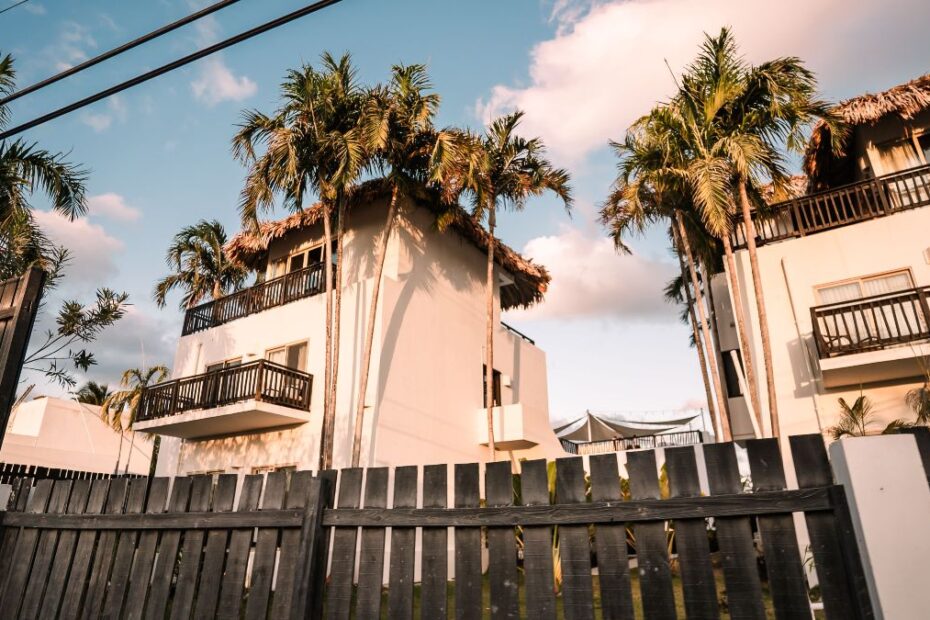
- Flooding and hurricanes: Ask how the property did in recent storms and heavy rains, how high it sits, and how it was built. Hurricane Iris caused heavy damage in Placencia in 2001, and Hurricane Lisa hit Belize City in 2022.
- Mangroves: On coastal and riverfront land, trimming or clearing mangroves requires a government permit, and doing it without one brings fines. If your plans depend on a cleared beachfront or a dock, find out what’s allowed before you buy.
None of these checks is part of a standard title search, so arrange them separately. A surveyor, a builder or engineer, and a conversation with the neighbors will cover most of them.
View this post on Instagram
5. Look at the Wider Area
The area around a property matters as much as the property itself. Belize is a small country, but living in a beach community full of tourists is very different from living in an inland town where the population stays the same all year.
Whatever area you’re considering, find out who actually lives there and when. Is it lived in year-round, or are half the neighboring houses Airbnbs sitting mostly empty outside the high season? Where is the nearest clinic, hospital, or grocery store? How long does it take to reach them? In much of the country, serious medical care means a trip to Belize City or abroad, so that question matters more the farther you are from either.
Moving to Belize often means moving to an island, which requires extra thought. On Ambergris Caye, Caye Caulker, and the smaller cayes, almost everything arrives by boat, which adds cost and time to any construction or repair. Getting to a hospital in Belize City means a water taxi or a short flight. If you plan to live on an island, especially as you get older, it’s worth having air ambulance or medical evacuation coverage.
Buying raw land needs its own warning. A remote, unserviced lot is cheap because bringing in a road, power, and water yourself is expensive and slow. An established community where that work has already been done costs more up front, but you can move in instead of starting a construction project.
6. Know the Developer
If you’re buying something that hasn’t been built yet, you’re really betting on the developer, so check them out before you look at anything else.
Over decades of developing residential and hospitality projects across Belize, I’ve learned that a master plan is only as good as the team behind it. Before you commit, find out whether the developer has completed projects of a similar size in Belize, and visit those projects to talk to the owners. Ask whether they have the money to finish the project or are relying on presales to pay for construction. Confirm that they own the land outright and that the project has its subdivision and environmental approvals. Find out where your deposit goes. Ideally, an attorney holds it in escrow rather than it going straight into the developer’s operating account. Finally, compare what they’ve built with what they promised. Delays happen, but a history of missed deadlines is a red flag.
My advice for buying property abroad comes down to three rules: buy what you can actually see, buy into a real community, and know the developer well.
7. Budget for the Full Cost of Ownership
The purchase price is only part of what you’ll pay when buying real estate in Belize. At closing, the biggest extra cost is stamp duty, the government’s transfer tax, which the buyer pays. The rate is 5% for Belizean citizens, permanent residents, and nationals of CARICOM, the Caribbean Community of 15 member states. Everyone else pays 8%, including tourists, temporary residents, and retirees under the QRP program. Add your attorney’s fees and registration costs, and ask your attorney for a full estimate before you sign anything.
Some of the running costs are surprisingly low, and some aren’t. Property tax is low because it’s based on the value of the land rather than the house. Insurance is the opposite, since coastal properties carry hurricane risk. Salt air, heat, and humidity wear on everything from roofs to air conditioners, so budget for regular maintenance. If you plan to rent the property out, add management fees. Vacation rentals also have to be licensed with the Belize Tourism Board and collect hotel tax.
Finally, think about how you’ll eventually sell. Belize has no capital gains tax, but its resale market is small and made up mostly of other foreign buyers, so selling can take a long time. Treat property in Belize as a long-term hold, whether you plan to keep it, pass it on, or sell it one day.
Final Thoughts
In my experience, most of the problems foreign buyers run into in Belize have little to do with the country itself. They come from rushing, skipping a check, or trusting the wrong person. If you take your time and get your own advice, buying in Belize is simpler than most people expect.
Frequently Asked Questions
Where do most foreign buyers buy real estate in Belize?
Ambergris Caye, and San Pedro in particular, is the busiest market and the strongest for vacation rentals, though it also has the highest prices. Buyers who want a quieter beach life tend to look at Placencia and Hopkins in the south. Corozal, near the Mexican border, and the Cayo District, inland around San Ignacio, are popular with people living in Belize full time on a smaller budget.
Do I need to be in Belize to close?
No. Many buyers sign documents before a notary in their own country or give a trusted representative power of attorney to sign for them. Your attorney will tell you exactly how the documents need to be signed and authenticated.
Do I need a Belize bank account?
Not to buy real estate, but having a bank account in Belize it much easier to pay property tax, utilities, and any local staff in Belize dollars. Expect more paperwork than you’re used to when opening an account as a non-resident, including references and proof of where your money comes from.
What happens to the property if I die?
Belize has no inheritance or estate tax, but your Belize property will still need to go through probate in Belize before it can pass to your heirs. A will that meets Belize’s legal requirements makes that process simpler and faster, so ask your attorney to draw one up or review yours when you buy.
Do I still owe taxes in the United States?
If you’re a US citizen, yes. Rental income from a Belize property has to be reported to the IRS, and foreign bank accounts with a combined balance over $10,000 have their own reporting requirements. Talk to a tax advisor who works with Americans abroad before you buy.
Joel Nagel has over three decades of experience in international business law, asset protection, cross-border transactions, and wealth planning. He is also chairman and co-founder of Caye International Bank and a co-founder of ECI Development, a Belize-based real estate development company.