What does a Big Mac cost in Central America in 2026? We go through the latest Economist figures country by country, compare them with prices in the United States and elsewhere in Latin America, and track how they’ve changed over the past eight years.
Americans have spent much of this week complaining about $20 burritos and what it now costs to eat out. But how do fast food restaurant prices in the United States actually compare with prices elsewhere?
At the end of last month, the Economist released the latest edition of its Big Mac Index, comparing the price of McDonald’s most famous burger in countries around the world.
So, how much does a Big Mac cost in Central America in 2026, how does that compare with the United States and elsewhere, and how have those prices changed over the years?
What Is the Big Mac Index?
The Economist created the Big Mac Index in 1986 as a simple, lighthearted way to compare purchasing power between different currencies. Back then, in the United States, a Big Mac came in at $1.60. The idea came from journalist Pam Woodall, who realized that McDonald’s efforts to produce essentially the same burger around the world made the Big Mac an unusually useful product for comparing prices between countries.
Four decades later, the index is one of The Economist’s best-known features. It takes purchasing power, a genuinely complicated idea, and reduces it to the price of a hamburger.
We should note the index was never intended as a precise economic measure or a cost-of-living ranking. It compares one standardized product, and the results sometimes bear little resemblance to what a country actually costs to live in (although sometimes they certainly do).
View this post on Instagram
How Much Does a Big Mac Cost in Central America in 2026?
Four Central American countries feature in the latest Big Mac Index: Costa Rica, Guatemala, Honduras, and Nicaragua. Panama and El Salvador both have McDonald’s restaurants but have never been included. That’s a shame, because a Big Mac costs around $4.40 in Panama and $4.25 in El Salvador, making Central America’s two dollarized economies the cheapest places in the region to buy one. But neither price is part of the index, so they don’t appear in the comparisons below. Belize doesn’t appear simply because there are no McDonald’s in that country.
It should come as no surprise to anyone who remotely knows Central America that Costa Rica is, of course, by far the most expensive of the four. After that comes Honduras, followed by Nicaragua and Guatemala. The Economist converts each country’s local price into US dollars using the exchange rate at the time of publication, allowing prices in colones, lempiras, córdobas, and quetzales to be compared directly.
- Costa Rica: $7.00
- Honduras: $5.19
- Nicaragua: $5.11
- Guatemala: $4.46
A Big Mac in Costa Rica costs around 57% more than one in Guatemala. Honduras and Nicaragua, meanwhile, are separated by eight cents.
How Do Central American Big Mac Prices Compare With the Rest of the World?
A Big Mac in the United States currently costs $6.22, putting it between Costa Rica and the other three Central American countries in the index. Yes, a Big Mac is more expensive in Costa Rica than in the USA. That obviously goes without saying, right? Costa Rica’s $7.00 Big Mac is 12.5% more expensive than the US version, while Honduras is 16.5% cheaper, Nicaragua 17.9% cheaper, and Guatemala 28.3% cheaper.
The gap in actual dollars is smaller than those percentages suggest. A Big Mac in Honduras costs $1.03 less than in the United States, and in Nicaragua the difference is $1.11. Even in Guatemala, the cheapest of the four, the gap is only $1.76. Set against average wages, a Big Mac is expensive for regular folk all over the region.
Elsewhere in Latin America, Uruguay has the world’s second-most-expensive Big Mac at $8.94. Colombia comes fourth at $8.00 for a burger. Now Colombia is a much cheaper country than Costa Rica by almost any measure, so this is actually super-surprising.
Looking at the complete index, Switzerland takes the top spot at $9.04, while Indonesia has the cheapest Big Mac at just $2.38. Costa Rica ranks 13th globally, ahead of the United States in 18th. Honduras comes in 28th, Nicaragua 31st, and Guatemala 40th.
How Have Big Mac Prices Changed Since 2018?
To see how much has changed, we can go back to 2018, the first year Costa Rica, Guatemala, Honduras, and Nicaragua all appeared together in the Big Mac Index. Costa Rica first appeared in 2004 at $2.61, while the other three debuted in 2018.
- Costa Rica: $4.03 in 2018 to $7.00 in 2026, an increase of around 74%
- Honduras: $3.26 to $5.19, up around 59%
- Nicaragua: $3.54 to $5.11, up around 44%
- Guatemala: $3.34 to $4.46, up around 34%
- United States (for comparison): $4.62 to $6.22, up around 35%
Costa Rica stands out, with the dollar price of a Big Mac rising almost three-quarters in eight years. Honduras has also outpaced the United States by a wide margin, while Nicaragua sits somewhere in between. Guatemala has moved almost exactly in line with the US over the same period.
The route from 2018 to 2026 wasn’t a steady climb. In Costa Rica, a Big Mac fell to $3.84 by 2021 and was still only $3.91 in 2022 before jumping to $5.41 in 2023. The US price rose more evenly, reaching $4.93 in 2021, $5.15 in 2022, and $5.58 in 2023.
Honduras reached $4.35 in 2023 before climbing above $5 this year, while Nicaragua passed $4 for the first time in 2023. Guatemala has climbed the most steadily of the four, reaching $4.00 in 2024 and $4.46 today.
Exchange rates matter in all of this. These are local prices converted into US dollars, so the figures move when local currencies move against the dollar, not only when the burger itself gets more expensive.
Forty Years of Burgernomics
Forty years on, the appeal of the Big Mac Index is that the numbers are so easy to understand. Exchange rates and purchasing power get complicated fast, but everyone knows what a hamburger is and roughly what they expect to pay for one.
How expensive those prices sound depends on who’s paying them. To a visitor arriving in Guatemala with US or European spending power, a $4.46 Big Mac isn’t much. To someone on an average local salary, it’s a lot. And anyone used to Costa Rican prices will look at the rest of the region with, shall we say, the resigned exasperation of someone who knows they’re getting ripped off but can’t do anything about it. Or fury. One of the two, anyway.
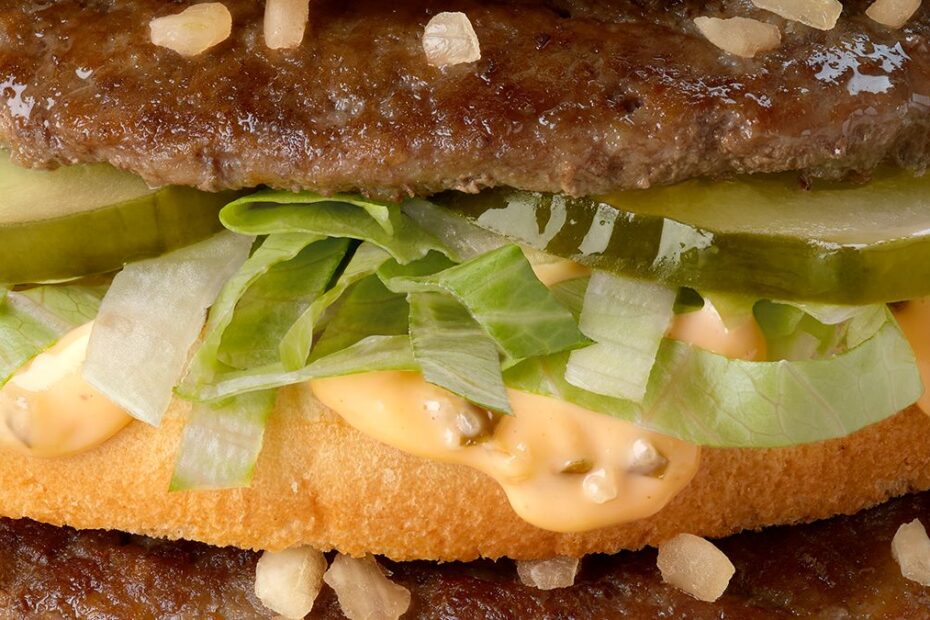
Exasperation and fury aside, the bottom line is that simple classic combo of two all-beef patties, special sauce, lettuce, cheese, pickles, onions on a sesame seed bun produces some remarkable comparisons, and 40 years after The Economist started making them, we’re apparently still curious about what a Big Mac costs somewhere else.