A practical guide to getting around Guatemala, covering public buses, tourist shuttles, domestic flights, boats, taxis, and local transport across the country.
Getting around Guatemala depends on where you are going, how much time you have, and how comfortable you are navigating local transport. The country’s geography plays a big role in this. Mountainous highlands, volcanic regions, and dense jungle all shape how people move from place to place.
Transport options vary widely between regions. Well-traveled routes linking cities and popular destinations are served by buses, shuttles, and a limited number of flights, while rural areas often rely on slower, more local forms of transport. In some places, boats are the most practical way to move around, while in others, walking or short taxi rides are enough.
Language ability, budget, and tolerance for delays also influence how travelers get around. Some options are designed with visitors in mind, while others reflect how Guatemalans move around day to day. The sections below outlines the various methods of how to get anywhere in Guatemala and explain where each one fits into a typical trip.
View this post on Instagram
Getting Around Guatemala by Plane
Flying plays a limited but useful role in getting around Guatemala. There’s no broad domestic flight network, but a small number of scheduled routes exist out of Guatemala City that can save significant time compared to traveling by road.
The most widely used domestic flight connects Guatemala City (La Aurora International Airport) with Flores (Mundo Maya International Airport) in the Petén region. This route is popular with travelers visiting Tikal and other archaeological sites in northern Guatemala, with flight times typically under an hour. Both TAG Airlines and Avianca (Aviateca) operate scheduled services on this route, with TAG offering the most frequent departures.
There are also scheduled domestic flights between Guatemala City and Puerto Barrios, on the Caribbean side. This route is primarily operated by TAG Airlines and provides faster access to the Izabal region and Guatemala’s Caribbean ports than the long overland journey.
Outside of these routes, domestic flying isn’t practical. There are no regular commercial flights linking places like Antigua, Lake Atitlán, the Pacific coast, or the western highlands. For most travel around Guatemala, road transport is the main option, with flights serving a small number of specific corridors.
Getting Around Guatemala by Bus
Guatemala’s bus network is the backbone of overland travel and the main way most local people get around. The system is extensive, cheap, and runs frequently throughout the day, linking even small rural communities with regional hubs.
The most visible part of this network is the chicken bus, known locally as camionetas. These are repurposed U.S. school buses that operate on both major highways and local roads, stopping frequently and often picking up passengers anywhere along the route. Fares are low and paid onboard, usually to a helper who collects money while the bus is moving. Chicken buses are common on popular routes between Antigua, Lake Atitlán, Quetzaltenango, and surrounding towns, though longer trips often require transfers.
Alongside chicken buses, Guatemala also has a small but reliable first-class bus system. A range of different companies operate air-conditioned coaches with assigned seating, luggage storage, and direct routes between major destinations. These buses are commonly used for longer journeys, including overnight routes.
Tourist Shuttles and Shared Vans
Tourist shuttles are a common way for visitors to move between Guatemala’s main travel hubs. These shared vans operate on fixed schedules, with routes like Antigua to Lake Atitlán super popular with travelers. They are designed primarily for travelers and run independently of the local bus system.
Most shuttles use air-conditioned minibuses with limited passenger numbers and dedicated luggage space. Pickups and drop-offs are usually arranged at hotels, hostels, or central meeting points, rather than bus terminals. This makes shuttles a more direct and predictable option for moving between popular destinations without navigating multiple transfers.
Several well-established operators run shuttle services across Guatemala. Routes typically run once or twice daily, and advance booking is common, especially during peak travel seasons.
While shuttles are more expensive than public buses, they offer a middle ground between local transport and private transfers, with fewer stops and simpler logistics for longer intercity journeys.
View this post on Instagram
Boats and Water Transport
Boats play a practical role in getting around certain parts of Guatemala, particularly where waterways connect towns more directly than roads. The main example is Lake Atitlán, where public boats operate throughout the day between lakeside communities. Towns such as Panajachel, San Pedro La Laguna, and Santiago Atitlán are linked by regular launches that function as the primary form of local transport around the lake. Boats run frequently during daylight hours, with schedules adjusted based on demand and weather conditions.
Another important water route is along the Río Dulce in eastern Guatemala. Boats connect inland towns with Livingston on the Caribbean coast, passing through river canyons and mangrove-lined channels. This route is commonly used by both residents and travelers moving between the Caribbean and the interior.
Outside of these areas, water transport is limited and largely recreational. Boats are not used for general intercity travel but remain essential in regions where lakes and rivers provide the most direct connections between communities.
Local Transport: Getting Around Guatemalan Cities and Towns
Local transport options in Guatemala are mainly used for short trips within cities and towns rather than long-distance travel. Availability and reliability vary depending on location.
Taxis are common in all major cities. Most taxis are not metered, so fares are typically agreed before departure. They are often used for airport transfers and short urban trips. Like elsewhere in Central America, however, it’s become better and safer to use Ride-sharing apps instead of street taxis. Uber operates reliably in Guatemala City and Antigua, including airport runs, with upfront pricing and app-based payments. inDrive is also popular, allowing passengers to negotiate fares directly with drivers. Yango and Picap have a smaller presence, mainly in larger cities. Outside major urban areas, app availability becomes inconsistent.
In smaller towns, tuk-tuks are a common way to get around. They are widely used around Lake Atitlán, in Flores, and in other compact communities, handling short distances and steep streets efficiently. And, of course, there’s always walking as a great alternative to all these options!
Driving in Guatemala
Driving yourself is another way to get around Guatemala, though the experience varies widely depending on where you are. The country’s main highways are generally paved and in reasonable condition, including the Pan-American Highway (CA-1) and CA-9, which connects Guatemala City with the Caribbean. These routes serve many of the country’s major cities and tourist areas, including Antigua and the access roads toward Lake Atitlán.
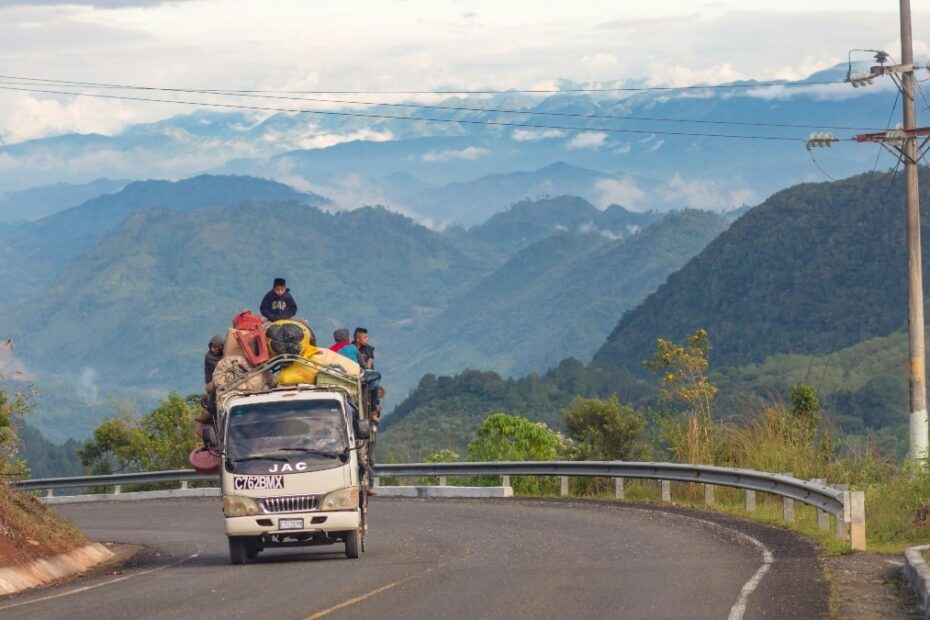
Away from the main highways, road conditions change quickly. Secondary and rural roads are often narrow, winding, and poorly maintained, with potholes, unmarked speed bumps, and frequent pedestrian and animal traffic. During the rainy season, landslides and flooding can temporarily block roads, particularly in mountainous and jungle regions.
Driving culture in Guatemala can feel unpredictable. Lane discipline is inconsistent, road rules are loosely observed, and motorcycles and heavy trucks are common on both highways and local roads. Night driving not recommended due to these reasons plus limited lighting and reduced visibility, so most long-distance driving is done during the day.
Foreign driver’s licenses are accepted, fuel is widely available, and police checkpoints are common on major routes.
When to Use Each Transport Option
Unless you have your own car, getting around Guatemala means combining several transport options rather than relying on just one. In practice, a few common patterns tend to emerge.
- For intercity travel, travelers usually choose between tourist shuttles and first-class buses. Shuttles are common on established visitor routes including Guatemala City to Antigua, Antigua to Lake Atitlán, Antigua to Lanquín, and Antigua to Flores. First-class buses operate on some of these same corridors, particularly longer routes such as Guatemala City to Flores, offering fixed schedules and direct overnight service.
- Flying is used less frequently, but it does play a role when time is limited. Scheduled domestic flights mainly connect Guatemala City with Flores and, to a lesser extent, Puerto Barrios. These flights are typically chosen when reaching Tikal or the Caribbean quickly is a priority.
- For arriving travelers, the transfer between La Aurora International Airport and Antigua is one of the most common journeys in the country. This trip is usually done by shuttle, private transfer, taxi, or ride-sharing services, rather than by public bus.
- Around Lake Atitlán, transport works differently. Boats are the main way to move between lakeside villages, while tuk-tuks and walking are used inside each community. Buses and shuttles are mainly used to enter or leave the lake region.
- Travelers focused on budget or local travel often combine chicken buses, colectivos, and boats, accepting longer travel times and multiple connections. Those prioritizing comfort and predictability tend to rely more on first-class buses, shuttles, ride-sharing services, and boats, using flights only on the few routes where they meaningfully save time.
With flexibility and planning, Guatemala’s transport network allows access to pretty much every region of the country, even if the journey itself sometimes takes longer than expected. But that’s half the fun of it, right?