A dispute over public access to Playa Blanca turns physical as Costa Rican authorities remove barriers and reopen a contested route.
Police and staff from the Punta Leona Beach Club & Nature Resort clashed this morning as local authorities moved to reopen a disputed access route to Playa Blanca, one of Costa Rica’s best-known beaches on the Central Pacific coast.
The operation was carried out by the Municipality of Garabito, the local government that oversees the Punta Leona and Jacó area. Officials removed a barrier at the entrance to the resort, arguing that it blocked access to a public road leading to the beach. Videos shared on social media showed confrontations between police and resort staff as the barrier was removed.
The incident is the latest development in a long-running dispute between Punta Leona and local authorities over public access to Playa Blanca. While the beach itself is public under Costa Rican law, the route used to reach it has been the subject of years of legal and political disagreements.
#Nacionales | 👉 Derribo de aguja termina a golpes con policías en Punta Leona
Lea más aquí: https://t.co/GRDcvliCaL pic.twitter.com/AyC7MzpPIz
— CRHoy.com (@crhoycom) June 4, 2026
Both Sides Defend Their Actions
According to Costa Rican media reports, the confrontation began as authorities moved to dismantle the access barrier. Footage shared online appears to show a member of the Punta Leona staff reacting after being restrained by a police officer, leading to a physical altercation involving multiple people. Police eventually secured the area and municipal machinery proceeded with the removal of the barrier.
Speaking to local media, Francisco González, mayor of Garabito, defended the operation, saying officials were simply reopening a public road.
“We are opening the road,” González told reporters.
In a separate statement, the mayor said the municipality was complying with long-standing administrative resolutions and restoring access to a route that local authorities consider public. He also indicated that a precautionary legal measure related to the dispute was no longer in effect, allowing the municipality to proceed with the intervention.
Costa Rican media reported that at least four people were detained during the operation for allegedly assaulting police officers. Authorities also removed vehicles that were reportedly blocking access to the area.
Punta Leona Beach Club & Nature Resort issued a strongly worded response, describing the municipality’s actions as “arbitrary” and “disproportionate.”
The resort argued that municipal officials entered private property and damaged infrastructure including security barriers, access controls, gates, and other facilities. Punta Leona also stated that the dispute over the access route remains under review before the Administrative Court and questioned the legality of the operation.
In its statement, the resort further alleged that police exceeded their authority during the intervention, claiming that security personnel were assaulted and that officers drew firearms despite Punta Leona’s own security staff not carrying weapons.
#Video Apertura de agujas en Punta Leona provoca altercado entre policías y personal https://t.co/dRYmZGh6BK
— Amelia Rueda (@ameliarueda) June 4, 2026
Long-Running Dispute Over Playa Blanca Beach Access
The latest confrontation is the most dramatic development yet in a dispute that has been simmering for years.
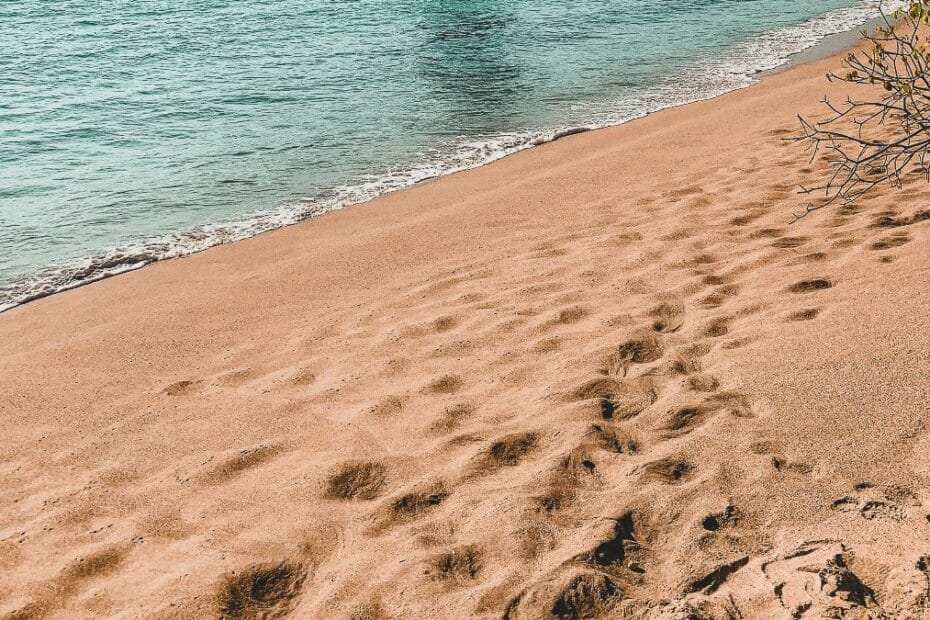
At the center of the disagreement is access to Playa Blanca, a white-sand beach located within the Punta Leona area north of Jacó and widely regarded as one of the most beautiful beaches on Costa Rica’s Central Pacific coast. While the beach itself is public under Costa Rican law, the route used to reach it has become the subject of an ongoing legal and political battle between Punta Leona and local authorities.
Garabito officials have long argued that public access to Playa Blanca has been improperly restricted. González has previously cited Costa Rica’s Maritime Zone law in defense of municipal efforts to guarantee access to the beach.
For its part, Punta Leona, maintains that public access already exists through alternative routes and that the municipality is attempting to open roads that pass through private property.
The dispute has drawn national attention over the past year, becoming one of Costa Rica’s most visible examples of the tension that can arise between public beach rights and the roads or infrastructure used to reach those beaches.
Are beaches in Costa Rica private? Understand public beach laws, beachfront property rules, and what buyers and travelers often get wrong.https://t.co/1HHFkugrfd
— Central America Living (@VidaAmerica) April 9, 2026
Why the Case Matters Beyond Punta Leona
The dispute has attracted national attention because it touches on a broader debate over public beach access in Costa Rica.
Under Costa Rican law, all beaches are public and cannot be privately owned. However, conflicts occasionally arise over the roads, paths, and infrastructure used to reach them. While the beach itself may be public, disagreements sometimes emerge over whether a particular access route crosses public or private land.
The issue has become prominent enough that lawmakers are currently considering measures aimed at standardizing beach access across the country through clearer signage, designated entry points, and national registries of access routes.
For now, the legal battle over Playa Blanca appears far from over. With court proceedings still ongoing and emotions running high, one of Costa Rica’s most closely watched beach-access disputes appears set to continue.