This article looks at wildlife in Central America through the animals most closely associated with each country and the places where they are most often seen. Rather than cataloging every species, it focuses on iconic wildlife, practical viewing locations, and the times of year that offer the best conditions for meaningful encounters.
Central America is one of the most biodiverse regions in the world, but some animals stand out more than others. Through national symbols, conservation efforts, and tourism imagery, certain species have become closely associated with specific countries.
This guide looks at the wildlife most commonly linked with each Central American country and, just as importantly, the places where travelers have the best chance of seeing them. While some species are elusive by nature, visiting the right habitats and protected areas offers meaningful wildlife experiences even when sightings are not guaranteed. But despite that, for travelers thinking ahead to future trips, including luxury wildlife holidays designed around nature, timing, and location, Central America is one of the most compelling regions to consider.
Belize Iconic Wildlife
Belize’s wildlife reputation is built around intact rainforest, low population density, and some of the strongest conservation frameworks in Central America. Large protected areas, particularly in and around the Maya Mountains, support species that have disappeared or become extremely rare elsewhere in the region. As a result, Belize is often associated with elusive but highly symbolic wildlife rather than guaranteed sightings.
Jaguars
The jaguar is Belize’s most internationally recognized wildlife symbol and plays a central role in the country’s conservation identity. The Cockscomb Basin Wildlife Sanctuary is the world’s first protected jaguar reserve and remains the most iconic place in Belize associated with the species. The sanctuary’s trail network allows visitors to move through prime jaguar habitat, where tracks, scat, and other signs of presence are sometimes visible, even though direct sightings are rare.
Jaguars are also present throughout the wider Maya Mountains region, including forest corridors connected to the Chiquibul Forest Reserve. These large, connected landscapes are essential to jaguar survival and reinforce Belize’s reputation as one of the species’ most important strongholds in Central America.
Jaguars are present year-round, but the drier months from January through May generally offer the best conditions for visiting jaguar habitat. Trails are more accessible, and reduced vegetation improves visibility. As with most big cats, jaguars are most active at dawn and dusk.
View this post on Instagram
Baird’s Tapirs
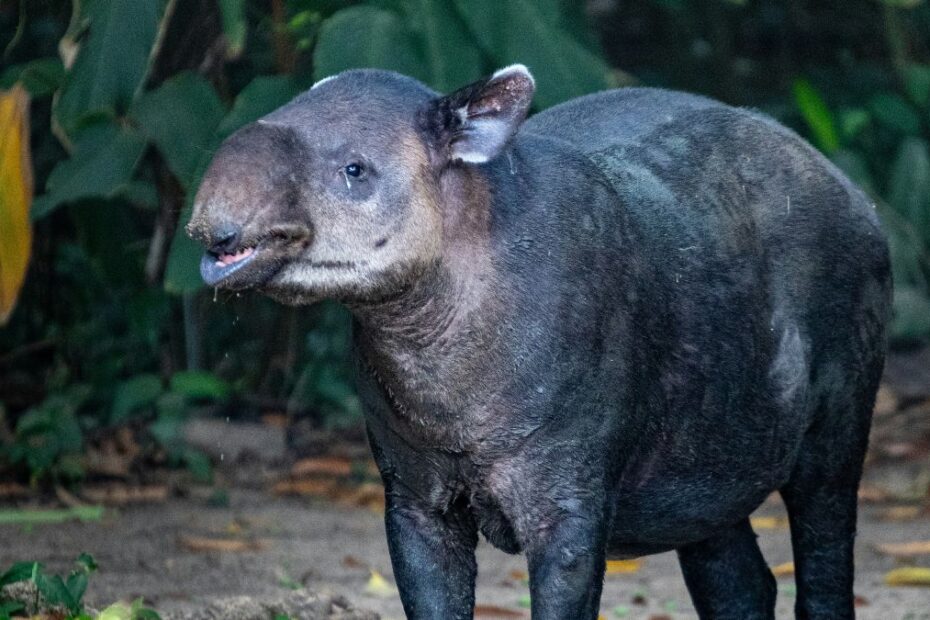
The Baird’s tapir is Belize’s national animal and one of the most distinctive creatures in the region. Known locally as the mountain cow, the tapir is closely associated with dense rainforest, rivers, and low-lying wetlands. Belize supports one of the healthiest remaining tapir populations in Central America.
The Tapir Mountain Nature Reserve in Cayo District protects critical tapir habitats and is one of the best places in Belize to understand how the species lives. Tapirs are also present in Cockscomb Basin Wildlife Sanctuary, particularly near waterways and quieter sections of the reserve. The area around Chan Chich Lodge is also frequently cited for tapir activity due to its intact jungle setting and limited development. This region lies along an important wildlife corridor and is often mentioned as a location for nocturnal encounters, especially near water sources.
Seeing a wild tapir is never guaranteed, which means the Belize Zoo in Belize City plays an important complementary role. Focused entirely on native species and conservation education, it provides one of the most accessible ways to learn about tapirs and their importance to Belize’s ecosystems.
Tapirs are active year-round but are most often encountered at night or in the early morning. The late dry season, roughly February through May, generally offers the best conditions, with easier access and increased animal movement around remaining water sources.
View this post on Instagram
Costa Rica Iconic Wildlife
Costa Rica has built its international reputation around wildlife more successfully than any other country in Central America. A long-standing commitment to conservation, a dense network of national parks and protected areas, and well-developed guiding infrastructure mean that many of the country’s most iconic animals are not only symbolic, but realistically observable for visitors. Unlike much of the region, Costa Rica’s wildlife experiences are often accessible even on relatively short trips.
Sloths
It’s fair to say that sloths are the animal most closely associated with Costa Rica and have become a visual shorthand for the country’s approach to nature and conservation. Both two-toed and three-toed sloths are found across much of the country, particularly in lowland rainforest and coastal forest environments.
One of the most reliable places to see sloths is the Manuel Antonio area, where individuals are frequently spotted in trees along main walking trails and near the beach. Sloths are also commonly seen in Tortuguero National Park, especially along canal edges and forest margins, where they blend into the surrounding vegetation.
On the Caribbean coast, Cahuita offers another strong option, with sloths often visible in coastal forest areas and even near village paths, sometimes outside formal park boundaries.
Sloths can be seen year-round, as they do not migrate or follow strict seasonal patterns. However, the drier months from December through April generally offer easier viewing conditions, with better trail access and clearer visibility. Early morning tends to be the best time of day, before heat and crowds increase.
View this post on Instagram
Red-eyed Tree Frogs
The red-eyed tree frog is one of the most photographed animals in Central America and has become an international symbol of Costa Rica’s rainforest biodiversity. Although small and nocturnal, it is widespread in suitable habitat and regularly encountered under the right conditions.
Tortuguero National Park is one of the country’s standout locations for amphibian life, with humid lowland rainforest providing ideal conditions for frogs. The La Fortuna area, near Arenal Volcano, is another classic destination, where guided night hikes through rainforest and secondary forest frequently produce sightings of red-eyed tree frogs resting on leaves near water sources.
The best time to see red-eyed tree frogs is during the rainy season, typically from May through November, when humidity is high and amphibian activity increases. Night walks are essential, as the frogs are primarily active after dark. While sightings are possible year-round, chances improve significantly during wetter months, particularly following rainfall.
View this post on Instagram
El Salvador Iconic Wildlife
Rather than sprawling rainforest reserves, wildlife encounters in El Salvador tend to be concentrated in specific national parks, dry forest habitats, and carefully managed coastal zones. As a result, El Salvador’s most iconic species are often among the more visible and accessible in the region.
Torogoz (Turquoise-browed Motmot)
The torogoz is El Salvador’s national bird and its most recognizable wildlife symbol. Known for its vivid turquoise and blue coloring and distinctive tail, it inhabits dry forest, forest edges, and semi-open landscapes, making it easier to spot than many rainforest species. El Imposible National Park is one of the country’s strongest locations for seeing torogozes in the wild, with established trails running through suitable dry forest habitat. Montecristo National Park, in the northern highlands near the borders with Guatemala and Honduras, offers a different setting, with cooler temperatures and cloud forest conditions that also support torogoz populations. Other highland areas, including regions around El Pital, are sometimes cited by birdwatchers due to similar habitat and elevation.
The best time to see torogozes is during the dry season, generally from November through April, when trails are more accessible and birds are more active and vocal. Early morning hours tend to provide the best viewing opportunities.
View this post on Instagram
Sea Turtles
Sea turtle conservation is one of El Salvador’s most visible wildlife efforts and plays an important role along the Pacific coast. The country is associated with several nesting species, including leatherback and olive ridley turtles, and encounters are closely tied to seasonal nesting activity rather than casual beach sightings. Jiquilisco Bay is one of El Salvador’s most important turtle nesting areas and is widely referenced in regional conservation programs, particularly for hawksbill turtles. In the eastern part of the country, beaches around La Unión are also associated with nesting activity and conservation-led tours.
The best time to see sea turtles in El Salvador is during nesting season, typically from October through December. Visits are usually organized through guided conservation initiatives, which may include observing nesting activity or participating in hatchling release programs, depending on timing and local regulations.
Guatemala Iconic Wildlife
Guatemala’s wildlife experiences are shaped by sharp contrasts in elevation and landscape. Cloud forests in the central and eastern highlands support entirely different species from the lowland rainforests of the north, allowing visitors to combine wildlife viewing with cultural and archaeological travel. Many of the country’s most iconic animals are closely tied to specific habitats rather than to widespread distribution.
Resplendent Quetzals
The resplendent quetzal is Guatemala’s national bird and one of the most symbolically important species in Central America. Long associated with freedom and sacred status in Maya culture, the quetzal is now most closely linked with the country’s remaining cloud forest ecosystems.
The Sierra de las Minas Biosphere Reserve protects extensive high-altitude forest and is one of Guatemala’s most important quetzal strongholds. Cloud forests near Cobán are also widely associated with quetzal viewing, with guided hikes focusing on known feeding and nesting areas. The Biotopo del Quetzal Mario Dary Rivera Reserve is another well-established location where conservation and tourism intersect, making it one of the most accessible options for visitors.
The best time to see quetzals is during the breeding season, generally from February through May, when birds are more active and more likely to be seen near nesting sites. Early morning hikes offer the strongest chances for sightings.
View this post on Instagram
Howler Monkeys
Howler monkeys are among the most recognizable mammals in Guatemala’s lowland rainforest and are strongly associated with the northern Petén region. Their deep calls are often heard long before the animals are seen and have become part of the sensory identity of Guatemala’s jungle landscapes. There’s something incredibly haunting and moving about the sounds of howler monkeys echoing around ancient Mayan ruins deep in the rainforest.
Tikal National Park is the most famous location for encountering howler monkeys, where they are frequently seen moving through the canopy around the ancient Maya ruins. Beyond Tikal itself, howler monkeys are also present throughout surrounding forest areas in Petén, reinforcing the link between Guatemala’s wildlife and its archaeological heritage.
Howler monkeys can be seen year-round, but the dry season from December through April generally offers the most comfortable conditions for walking trails and observing canopy wildlife. Early morning and late afternoon are the most active periods.
View this post on Instagram
Honduras Iconic Wildlife
Honduras has one of the more varied wildlife profiles in Central America because its most iconic species are split between two very different environments. Inland, the country is strongly associated with tropical forest and conservation projects tied to the Copán region and the Mosquitia. Offshore, the Bay Islands have helped define Honduras as a standout marine destination, particularly for larger migratory species.
Scarlet Macaws
The scarlet macaw is Honduras’ national bird and one of the most visually recognizable animals in the region. For most travelers, the Copán area is the most practical base. Macaw Mountain Bird Park, near Copán Ruinas, provides reliable viewing and a strong conservation context, and it is closely tied to reintroduction and education efforts in the region. Wild macaws are sometimes seen flying over the Copán Valley, which reinforces the bird’s link to the area’s cultural landscape.
For a more remote and habitat-driven experience, the Río Plátano Biosphere Reserve is one of Honduras’ most important protected areas and supports wild macaw populations. Sightings there are less predictable, but the setting is closer to what many people picture when they think of Honduras’ largest intact rainforest landscapes.
Scarlet macaws can be seen year-round, but the dry season from December through April generally offers the best conditions for travel and wildlife viewing, with clearer weather and easier access to trails and river routes. Early morning is typically the best time to spot macaws as they move between feeding and roosting areas.
View this post on Instagram
Whale Sharks
Whale sharks are one of Honduras’ most distinctive marine attractions and have become closely associated with the Bay Islands. Utila is the best-known base for seasonal whale shark encounters and has built much of its dive reputation around them. Roatán is also used as a jumping-off point for offshore trips and seasonal sightings, giving travelers two strong options depending on their island itinerary.
The best time for whale sharks in Honduras is generally March through April, when seasonal conditions increase the likelihood of encounters around the islands. Sightings still depend on ocean conditions and food availability, so planning around this window improves the odds, but no specific day-to-day experience is guaranteed.
View this post on Instagram
Nicaragua Iconic Wildlife
Nicaragua is Central America’s biggest country and contains some of the largest remaining natural areas in the region, particularly in the Caribbean lowlands. Its most iconic species are associated with these expansive landscapes rather than with easy roadside viewing. Wildlife travel here tends to be more about choosing the right region, accepting logistical complexity, and focusing on habitat quality as much as the headline species.
Jaguars
Jaguars are one of Nicaragua’s most emblematic animals and a symbol of the country’s remaining wilderness. The two reserves most closely associated with jaguar habitat are the Bosawás Biosphere Reserve and the Indio Maíz Biological Reserve. Both lie in the Caribbean lowlands and protect large tracts of rainforest that support big cats and a wide range of other wildlife.
Encounters with jaguars are rare anywhere in Central America, and Nicaragua is no exception. The most realistic approach is to treat these regions as places to experience prime habitat through guided or ranger-supported access, with the understanding that the overall biodiversity is the main reward even if the flagship predator stays out of sight.
The best time to plan travel into these reserves is during the drier months, generally from January through April, when access is easier and river and trail conditions are more manageable. As with most big cats, the periods around dawn and dusk are when jaguars are most active, even though sightings remain uncommon.
View this post on Instagram
Sea Turtles
Nicaragua’s most famous turtle-watching destination is the La Flor Wildlife Refuge near San Juan del Sur. The site is known for large nesting events, and it is widely regarded as one of the most important sea turtle nesting beaches in the region. Visits are typically structured around conservation management, with regulated access intended to protect nesting activity.
The best time to see nesting activity at La Flor is during peak season, typically from August through October, when arribadas are most likely. Planning within this window gives the best chance of seeing turtles coming ashore, although exact timing can vary year to year based on ocean and weather conditions. Evening and nighttime visits are usually the most productive because nesting typically occurs after dark.
View this post on Instagram
Panama Iconic Wildlife
Panama is famous in Central America for the sheer range of wildlife experiences available within relatively short distances. Dense rainforest begins close to major infrastructure, while the country’s Pacific coast supports some of the region’s most reliable large-marine-species viewing. Panama’s iconic wildlife is shaped as much by accessibility as by biodiversity, with strong options for both dedicated nature travelers and visitors adding wildlife days to a broader itinerary.
Harpy Eagles
The harpy eagle is Panama’s national bird and one of the most powerful raptors in the Americas. It requires large, intact rainforest, which is why the species is most closely associated with the country’s biggest wilderness landscapes. Darién National Park is the most emblematic location for harpy eagle habitat, offering the kind of deep forest environment where the species can still persist.
For travelers who want a more accessible rainforest experience, Soberanía National Park near the Panama Canal is one of the country’s best-known birding destinations. While a harpy eagle sighting is never something to plan around, Soberanía’s combination of forest trails and canopy-level viewing opportunities makes it one of the most practical places to experience Panama’s rainforest birdlife without the logistical demands of the Darién.
The best time for rainforest birding, including any chance-based search for rare raptors, is during the drier months from January through April, when trails are easier, conditions are clearer, and sustained time in the forest is more comfortable. Early morning hours generally provide the strongest overall bird activity.
View this post on Instagram
Humpback Whales
Humpback whales are one of Panama’s signature marine wildlife experiences and a major seasonal highlight on the Pacific coast. The most widely associated whale-watching regions are the Gulf of Chiriquí and Coiba National Park, where boat tours operate in waters used by migrating whales.
The best time to see humpback whales in Panama is typically from July through October, when whales migrate through the region to breed and calve. This window gives Panama one of the strongest whale-watching seasons in Central America, and planning within these months significantly improves the likelihood of encounters. Calm morning conditions often make for better visibility and a more comfortable boat experience.
View this post on Instagram
Wildlife in Central America Wrap Up
Seeing wildlife in Central America depends as much on timing and location as on biodiversity. Many of the region’s most recognizable species are tied to specific habitats and seasonal patterns, which means meaningful encounters tend to happen through careful planning rather than chance.
For travelers willing to match their trips to the right places and times of year, Central America offers a wide range of well-protected environments and thoughtfully managed parks. These settings provide the opportunity to experience some of the wildlife in Central America in a way that reflects both the region’s ecological diversity and its long-standing commitment to conservation.