Looking for the most comfortable climates in Central America? In this article, we highlight the region’s best cities and towns where you can avoid constant heat, humidity, and year-round A/C.
When many outsiders think about Central America, they picture tropical beaches, heavy humidity, and year-round heat. And in fairness, that’s pretty much the norm across much of the region. Spend time in places like Panama City, Guanacaste, or anywhere else at sea level and air conditioning fast feels less like a luxury and more like a necessity.
But that’s only part of the story. Across the region, major cities and smaller mountain towns sit thousands of feet above sea level, creating far more comfortable temperatures than many first-time visitors expect. In these places, daytime temperatures often stay mild, evenings cool off naturally, and many residents never need air conditioning at all.
Why Long-Term Residents Often Prefer Cooler Climates
That’s one reason so many expats, retirees, and remote workers eventually shift their focus inland. After all, hot beach weather is fantastic when you’re on vacation and spending most of your time in the ocean, at the pool, or hopping between air-conditioned hotel rooms, restaurants, and bars. But actually living full-time in that climate can get old fast. Constant heat, humidity, and A/C reliance wears on some people over time, particularly when they have to work and stay productive.
For this article, we’re focusing on one thing only: Identifying the places around Central America with the most comfortable climate. We’re not factoring in cost of living, safety, infrastructure, or quality of life. Nothing like that. Just comfortable climate.
What Actually Makes a Climate Comfortable?
Before ranking locations, it’s worth defining what “comfortable” actually means because climate preferences are highly personal. Some people genuinely enjoy tropical heat and don’t mind running air conditioning year-round. Others want cooler evenings, lower humidity, and temperatures that rarely feel extreme in either direction. For this ranking, we’re focusing on a few practical factors that tend to matter most for long-term comfort.
- Daytime temperatures: Places that regularly sit in the mid-70s to low-80s Fahrenheit tend to feel far more manageable than places that regularly push into the 90s.
- Nighttime cooling: This is a big one. Even warmer cities can feel far more livable if evenings cool down enough to comfortably sleep without air conditioning.
- Humidity: Heat feels very different depending on moisture levels. A dry 85-degree day can feel far more comfortable than an 85-degree day in a humid city at sea level.
- Rainfall patterns: Rain itself isn’t necessarily a problem. Many people enjoy predictable afternoon showers, and if you’re coming to Central America. you better enjoy them, otherwise you’re in the wrong part of the world. But constant cloud cover, long rainy seasons, or year-round dampness can become less appealing over time.
- Cold snaps: Central America rarely gets truly cold, but some higher-elevation cities can feel surprisingly chilly at night, particularly if homes aren’t built for cooler temperatures.
In short, our search for the most comfortable climates in Central America means we’re seeking climates that feel balanced. Not too hot, not too cold, and not so humid that you’re constantly reaching for the thermostat.
Ranking Central America’s Capital Cities by Climate Comfort
Not everyone relocating to Central America is moving straight to a cool, mountain town. Many people first land in capital cities for work, logistics, healthcare, government services, or simply because that’s where major infrastructure exists. And when it comes to pure climate comfort, some capitals are far easier to live in than others.
Again, this ranking is based purely on weather. We’re looking at temperatures, humidity, nighttime cooling, and how often you’ll realistically want air conditioning.
1. San José, Costa Rica
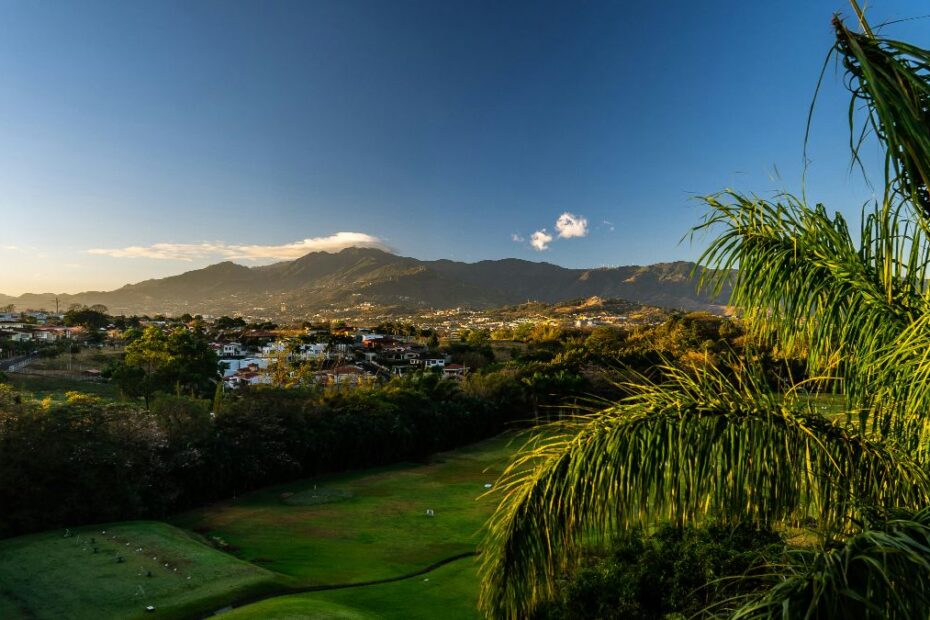
This is probably the region’s most comfortable capital city, climate-wise. Sitting at roughly 3,800 feet above sea level in Costa Rica’s Central Valley, San José rarely gets excessively hot or cold. Daytime temperatures typically sit in the mid to high 70s Fahrenheit, evenings cool down naturally, and most homes never install air conditioning at all.
2. Guatemala City, Guatemala
Often overlooked, Guatemala City has one of the most consistently pleasant climates in the region thanks to its higher elevation. Warm days, cooler evenings, and relatively moderate humidity make it one of Central America’s true “eternal spring” capitals, though nights can occasionally feel surprisingly cool.
3. Tegucigalpa, Honduras
Many people assume Honduras is uniformly sweltering, but Tegucigalpa benefits from elevation that keeps temperatures far more manageable than coastal cities like La Ceiba or San Pedro Sula. It’s a tad warmer than San José or Guatemala City, but still relatively comfortable by regional standards.
4. San Salvador, El Salvador
San Salvador sits in a valley that offers some elevation relief, but it’s noticeably warmer than the capitals above it. Many residents still rely on fans and occasional air conditioning during hotter periods, though evenings are generally more comfortable than coastal El Salvador.
5. Managua, Nicaragua
This is where the rankings begin to shift toward climates that many long-term residents find challenging. Managua is hot for much of the year, particularly before the rainy season begins. Lake breezes help somewhat, but many homes and apartments rely heavily on fans or air conditioning.
6. Belmopan, Belize
Okay, we know that not many people actually live in Belmopan, but it’s still a Central American capital. Belmopan is slightly less intense than coastal Belize City, but Belize remains one of the region’s hottest and most humid countries. For most people, avoiding air conditioning entirely here would be difficult.
7. Panama City, Panama
No capital city in Central America feels more dependent on air conditioning than Panama City. It’s hot, humid, and consistently tropical year-round. Great if you love warm weather. Less so if you’re trying to escape heat and humidity. Arguably the best, most cosmopolitan city in Central America, Panama City has many, many attributes. But the climate isn’t one of them.
View this post on Instagram
Central America’s Best Non-Capital Cities for Climate Comfort
This is where the region’s true “sweet spot” climates emerge. Central America’s most comfortable climates are found in smaller highland communities where elevation keeps temperatures moderate and evenings naturally cool.
These, in no particular order, are the places where the region’s “eternal spring” reputation feels most legitimate.
Boquete, Panama
Sitting in Panama’s Chiriquí Highlands at roughly 3,900 feet above sea level, Boquete offers warm but rarely hot daytime temperatures and consistently cool evenings. Many homes don’t need air conditioning at all. The biggest tradeoff is rain. Boquete’s lush landscape exists for a reason, and some people eventually find the cloud cover and frequent showers a bit much.
The Central Valley, Costa Rica
We include Costa Rica’s Central Valley as a whole here because comfortable climates aren’t limited to one standout town. Places like Grecia, San Ramón, Cartago, and the San José western satellites of Escazú, Santa Ana, and Ciudad Colón all benefit from the same elevation-driven climate advantages. Warm days, cooler evenings, and relatively moderate humidity make the Central Valley one of the easiest regions in Central America to live without relying heavily on air conditioning. There’s a reason why the Central Valley is where most of the people are.
El Valle de Antón, Panama
Often overshadowed by Boquete, El Valle offers another comfortable climate thanks to its elevation and sheltered mountain setting. Days tend to be warm without becoming oppressive, while evenings remain comfortable year-round.
Antigua, Guatemala
This is one of the region’s classic “eternal spring” destinations. Warm days, cool nights, relatively low humidity, and very little temperature variation make Antigua one of Central America’s most consistently comfortable climates. It’s one of the few places in the region where the weather often lives up to the hype.
Quetzaltenango, Guatemala
Known locally as Xela, Quetzaltenango sits much higher than Antigua and feels noticeably cooler. Some people love the crisp mornings and cooler nights. Others may find it a little too chilly by Central American standards, particularly in homes that aren’t built for colder evenings.
Matagalpa and Jinotega, Nicaragua
These northern highland towns rarely get the international attention of Boquete or Antigua, but they offer some of Nicaragua’s most comfortable year-round weather. They’re far cooler and less humid than Managua and the country’s Pacific beach towns, while still avoiding the colder nights found in some higher-altitude locations.
Copán Ruinas, Honduras
A smaller contender, but one worth mentioning. Copán Ruinas offers a milder climate than much of Honduras thanks to its elevation and inland location, though it doesn’t quite match the consistency of Panama or Guatemala’s top highland destinations.
Santa Ana and Ahuachapán
El Salvador doesn’t have many true “eternal spring” destinations on par with Guatemala, Costa Rica, or Panama, but western cities like Santa Ana and Ahuachapán offer noticeably more comfortable climates than the country’s hotter coastal zones and eastern lowlands. They’re still warmer than the top-tier highland climates in the region, but they avoid some of the worst heat.
San Ignacio and Mountain Pine Ridge Forest Reserve
Belize is probably the toughest country in Central America for people seeking mild, spring-like weather. Much of the country is low-lying, humid, and warm year-round. Inland areas around San Ignacio and higher terrain near Mountain Pine Ridge can feel slightly cooler and less humid than the cayes or coastline, but this is not a true “no A/C needed” country for most people.
View this post on Instagram
A Note About the “Best Climate in the World” Myth: Atenas, Costa Rica
No article about climate comfort in Central America would be complete without addressing the Costa Rican community of Atenas. For years, this small town west of San José has been marketed as having the “best climate in the world,” a claim that gained traction during Costa Rica’s early 2000s retirement boom and was heavily amplified by organizations like International Living and real estate marketers targeting foreign buyers.
To be fair, Atenas does have a very pleasant climate. It sits at a lower elevation than much of Costa Rica’s Central Valley, which means warm days, cooler evenings, and less of the chill you can occasionally feel in places like Cartago or higher parts of Heredia.
But, in our opinion, “best climate in the world” is a stretch. Atenas can feel quite a bit hotter during the dry season than many newcomers expect. Some homes still rely heavily on fans, and depending on your exact elevation and location, it can feel significantly warmer than nearby towns. Which is fine, if that works for you.
Plenty of other Costa Rican towns, though, offer equally comfortable (or better) year-round weather. San Ramón often feels cooler and fresher. Parts of Heredia offer consistently milder temperatures. Grecia and parts of Cartago also have strong climate arguments of their own. They were just never pushed as hard by the real estate guys.
Now, don’t get us wrong. Atenas is a very comfortable place to live, climate-wise. It’s just not the uncontested weather champion that decades of marketing made it out to be.
View this post on Instagram
Central America’s Climate Is More Diverse Than Many People Realize
As discussed at the beginning, one of the biggest mistakes people make when thinking about Central America is assuming the entire region feels like a tropical beach destination. While lowland areas are hot, humid, and heavily reliant on air conditioning, much of Central America’s interior offers something very different.
The aforementioned places like Guatemala City, Costa Rica’s Central Valley, Boquete, and others show just how varied the region can be. In many of these locations, temperatures stay comfortable year-round and air conditioning feels optional rather than essential. The bigger lesson is to avoid broad assumptions and marketing hype. A beach town may sound ideal until you experience months of heat and humidity. A heavily promoted “perfect climate” town may not feel perfect to you at all.
At the end of the day, though, climate comfort is still highly subjective. Some people love year-round tropical heat. Others prefer cooler mountain air and don’t mind needing a blanket at night. Some want sunshine above all else, while others are happy with afternoon rain if it keeps temperatures down. The “most comfortable climates in Central America” ultimately depends on what feels most comfortable to you.