Moving to Central America? Your investments can often stay where they are, but rules around accounts, taxes, currencies, and overseas access may change.
If you’re moving abroad, there’s usually no reason your investments have to come with you. Stocks, funds, retirement accounts, and other investments can often stay exactly where they are. What might change is what you’re allowed to do with them once you live overseas.
Your brokerage might restrict certain investments after you report a foreign address. You might be able to keep a tax-advantaged account but no longer contribute to it. Your new country may also treat overseas investment income differently, and exchange rates start to matter when you’re drawing money in one currency and spending it in another.
You may find that very little changes. Either way, it’s worth knowing where you stand before moving rather than finding out after you’ve changed your country of residence.
Your Existing Investment Account Might Change
One of the first things to check is what your investment provider allows for customers who move overseas.
Policies vary. Some providers continue serving existing customers but restrict the investments they can buy. Others limit particular account types or portfolio management services. There may also be separate arrangements for international customers.
Your new address can affect your options when opening an account too. Anyone interested in actively trading international markets can check here how one online platform provides access to forex and CFDs based on shares, indices, commodities, and other markets.
There isn’t a single rule covering every provider or destination, so check the policy that applies to your accounts and the country you’re moving to.
Tax-Advantaged Accounts Can Work Differently After You Move
Special tax treatment back home doesn’t always continue in quite the same way once you’re living abroad.
Take UK Individual Savings Accounts (ISAs), relevant to British citizens. If you move permanently to Central America, you can keep an existing ISA and retain its UK tax benefits. You generally can’t continue adding money while you’re non-UK resident, although contributions can resume if you later become UK resident again.
Your new country of residence may not recognize those tax advantages either. An account that shelters investment income or gains from tax back home may receive different treatment after you move.
If you already have an ISA or another tax-advantaged account, check what happens to it before you move, especially if you intend to keep contributing.
Your New Country May Not Tax Your Overseas Investments
Several Central American countries use territorial tax systems. Broadly speaking, that means they tax income sourced within the country rather than automatically taxing everything a resident earns worldwide.
Costa Rica generally taxes Costa Rican-source income, for example. Panama also bases individual income tax on income sourced within the country. In Guatemala, foreign-source investment income and capital gains generally fall outside the country’s income tax system.
Those rules could soon change in Costa Rica. A bill presented in September 2026 proposes a 15% tax on certain foreign-source passive income received by Costa Rican tax residents, including dividends, interest, capital gains, and income from rental properties overseas. The proposal is still going through the legislative process and has not become law.
This matters if you plan to keep shares, funds, property, or other investments overseas after moving to Central America. Working out where investment income is actually sourced isn’t always as simple as looking at where the account or asset happens to be.
Your home country can remain part of the equation too, particularly if you’re a U.S. citizen.
U.S. Citizens Have an Extra Layer to Consider
U.S. citizens generally remain subject to U.S. tax on worldwide income while living abroad. An American living in a Central American country with a territorial tax system still has U.S. reporting and tax obligations on investment income.
Buying investments overseas can create further complications. Certain foreign mutual funds, ETFs, and similar investments can fall under the Passive Foreign Investment Company (PFIC) rules for U.S. taxpayers, bringing additional reporting requirements and potentially unfavorable tax treatment.
Americans therefore need to check the U.S. tax implications before buying investments locally or elsewhere overseas. An investment that’s readily available where you live can still be complicated from an IRS perspective.
Consider Local Currencies
Exchange rates matter more when your investments are held in one currency and your bills are paid in another.
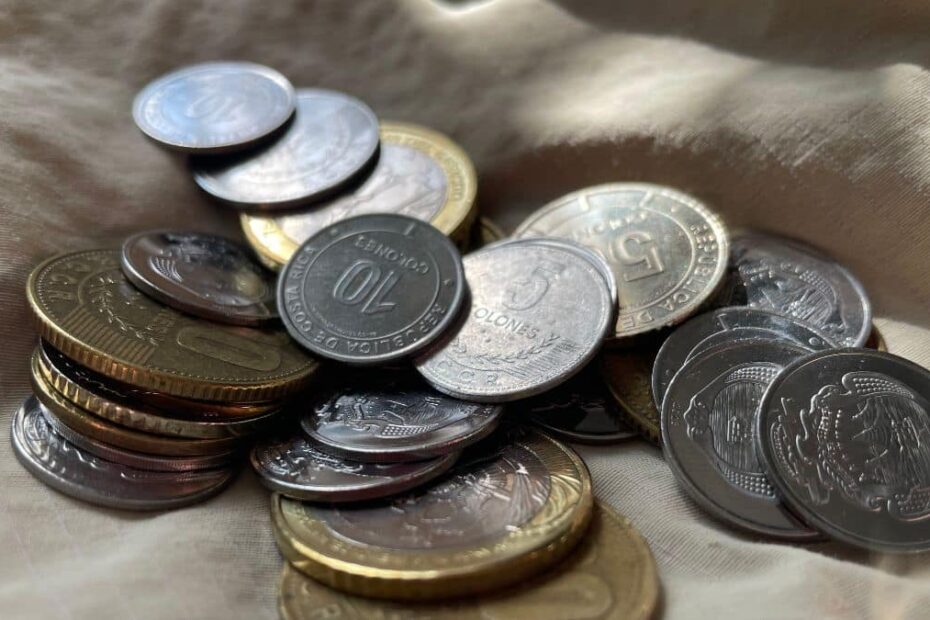
Say you move to Costa Rica with a portfolio in U.S. dollars and start making withdrawals to cover expenses in colones. How far those withdrawals go now depends partly on the exchange rate. A stronger colón means fewer colones for each dollar. A weaker colón gives you more.
The situation isn’t the same everywhere in Central America. Panama and El Salvador use the U.S. dollar, while the Belize dollar is pegged at BZ$2 to US$1. Elsewhere in the region, exchange-rate movements can directly affect how far withdrawals from overseas investments go.
Managing Investments From Central America
Managing investments from overseas also means making sure you can reliably access your accounts, especially if you trade regularly.
Internet service is generally good and getting better around the region, but power cuts and internet outages happen. If you need time-sensitive access to an account, having mobile data or another backup connection makes sense.
Think about two-factor authentication before changing your phone number or SIM card as well. Losing access to a number used by your bank or investment platform for verification can create an avoidable headache. And when you’re traveling, unsecured public Wi-Fi isn’t the place to be logging into financial accounts.
For many expats, moving to Central America won’t require a major overhaul of their investments. The important thing is to find out what actually changes once you live overseas before selling investments, transferring retirement savings, or opening new accounts.