Central American food is more varied than its reputation for rice and beans suggests. This FAQ looks at what people really eat across the region, the cultures that shaped its cuisines, and what travelers should know about eating here.
Food never really tops the list of reasons people travel to Central America. No-one is paying thousands of dollars just to come and eat gallo pinto or try a baleada. That might sound harsh, but it’s true. As an overall region, we have two standout culinary destinations here in Latin America with Mexico and Peru, and our little corner of the world doesn’t come close to either for true foodies. Relatively few travelers arrive with a list of restaurants and dishes forming the backbone of their trip.
But everyone has to eat, and there’s far more to food in Central America than the handful of dishes that appear repeatedly in travel guides. And while Central American food might not come with the flair and fame of Mexican and Peruvian cuisine, it is, for the most part, good honest “campesino” fare. Across all seven countries, you’ll keep seeing many of the same ingredients and traditions, but that doesn’t mean the food is all the same.
This guide takes a closer look at what eating in Central America is really like through some of the questions travelers most often ask about food in the region. We’ve looked at the questions people search for about Central America as a whole and each of its seven countries, focusing on those that tell us something broader about how people eat here rather than simply explaining individual dishes. Some have simple answers. Others are a little more complicated. Together, they offer a pretty good introduction to Central American food in all its forms.
1. Is There Really Such a Thing as “Central American Food”?
Yes, but not in the sense that there is a single Central American cuisine. It’s more useful to think of the region as a family of related cuisines, sharing ingredients, history, and cooking traditions that existed long before the modern borders separating the seven countries.
The family resemblance is strongest through the old Mesoamerican heartland, where corn and beans remain fundamental to everyday food. But the further south you travel, the less tidy that definition becomes. Panama is the obvious example. Its food reflects its position between Central and South America and the Caribbean, with dishes like sancocho connecting it to culinary traditions found in Colombia, Venezuela, and across the Caribbean as much as to its northern neighbors.
Elsewhere, the boundaries are just as messy. Garifuna food crosses Belize, Guatemala, and Honduras, while the Central American Caribbean has different culinary traditions than those found inland and along the Pacific side of the isthmus.
“Central American food” works as an umbrella term, but not as the name of one uniform cuisine. It’s a family of cuisines whose relationships don’t necessarily follow the lines on a modern map.
2. What Cultural Influences Have Shaped Central American Food?
Well, we can start with the people who were here before Europeans and Africans arrived. Indigenous food traditions provide the oldest layer of Central American cooking, particularly the Maya and other Mesoamerican cultures in the north of the region. Corn, beans, squash, chiles, cacao and numerous other native ingredients were being cultivated and eaten centuries before the Spanish arrived.
Then Spanish colonization brought new animals, crops, ingredients and cooking traditions, which mixed with existing Indigenous ones rather than simply replacing them. That’s why so much traditional Central American food is mestizo in the literal sense. Indigenous and Spanish cooking mixed together, and what people eat today grew out of both. African and Caribbean influences form another major part of the story, particularly with the Garifuna people and along the Atlantic coast.
Later immigration brought further influences, including Chinese, Italian, Arab and other food traditions that became more or less embedded depending on the country. Costa Rican cuisine, for example, reflects Afro-Caribbean and Chinese immigration alongside its Indigenous, European and African roots, while Panama’s history as a global crossroads has made its food particularly difficult to squeeze into any neat Central American category.
Those international influences continue today, particularly in the region’s cities and tourist destinations, where restaurants increasingly cater to people from all over the world. Technology has made that easier too, with digital menu platforms like MenuForma allowing restaurants to offer their menus in multiple languages without having to print separate versions for international visitors.
3. What Is Garifuna Food, and Where Can You Find It?
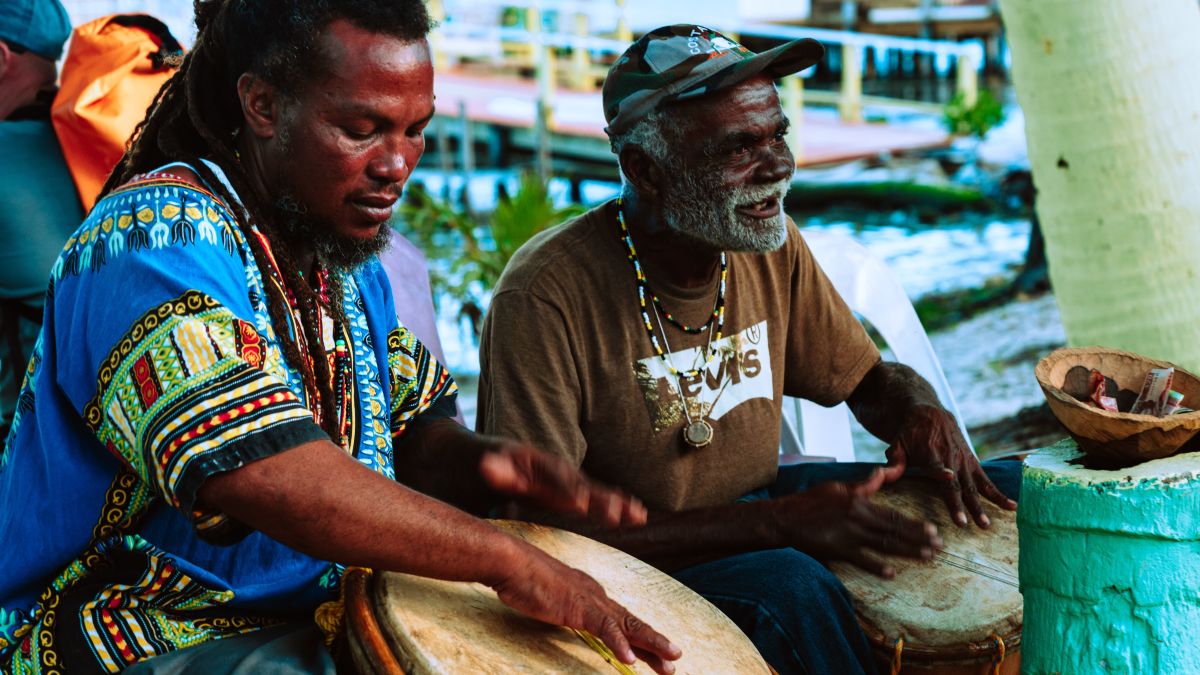
Garifuna food is the traditional cuisine of the Garifuna, an Afro-Indigenous people whose communities are found along the Caribbean coasts of Belize, Guatemala, Honduras, and Nicaragua. Their ancestors arrived in Central America from the Caribbean island of St. Vincent in the late 18th century, bringing traditions with both African and Indigenous Caribbean roots.
Fish and other seafood feature prominently in Garifuna food, alongside coconut, plantains, bananas, and cassava. Hudut is perhaps the best-known example, combining mashed plantains with a fish stew made with coconut milk, while cassava is traditionally processed into ereba, a thin, crisp bread.
For travelers, Belize and Honduras offer some of the easiest opportunities to sample Garifuna food, particularly around communities along their Caribbean coasts, although the tradition also extends into Guatemala and Nicaragua.
View this post on Instagram
4. What Do People Actually Eat Every Day in Central America?
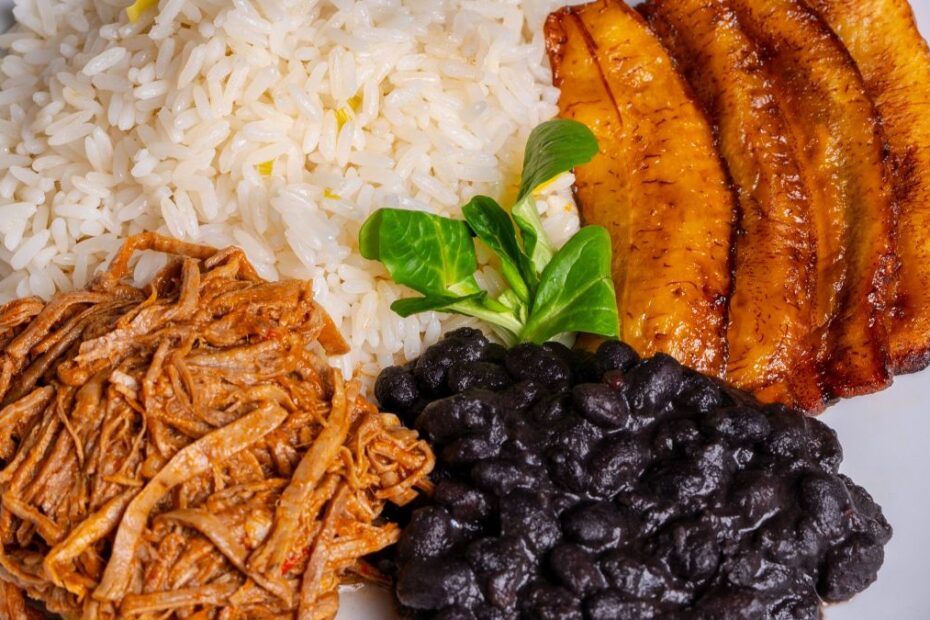
For the most part, everyday food in Central America is simple, filling, and unfussy. Rice and beans feature heavily throughout the region, accompanied by some combination of tortillas, eggs, cheese, plantains, meat, vegetables, soups, and whatever else is locally available. The exact combinations and preparations change from place to place, but the basic principle of a substantial meal built around inexpensive staples is the main takeaway.
Breakfast often means some combination of eggs, beans, tortillas, cheese, plantains, and rice, although exactly what appears on the plate varies by country. Lunch is traditionally the main meal of the day and is where the familiar plates served in local restaurants come into their own: rice, beans, a protein, salad or vegetables, perhaps plantains, often accompanied by a fresh fruit drink. Dinner may be lighter or simply another variation on the same ingredients.
That’s worth remembering when reading lists of “must-try Central American foods.” Pepián, vigorón, sancocho, and other traditional dishes are important parts of their respective food cultures, but that doesn’t mean everyone is sitting down to them every Tuesday night. The best way to understand how most Central Americans eat isn’t through a list of national dishes, but through the everyday combinations of familiar staples that keep appearing on tables across the region.
5. Is Central American Food Spicy?
This is perhaps the most-asked question people have about Central American food, and the answer surprises a lot of them. Central American food is, on the whole, not spicy. In fact, we’d go as far as saying that most Central Americans don’t particularly like spicy food at all. That’s a generalization, of course, but one that stands up pretty well in everyday life. You can see this, for example, in Indian restaurants in San José and Panama City, where curries tend to be kept mild for local tastes. No-one’s ordering a vindaloo in this part of the world!
All this, as we say, often surprises visitors who assume that the further south you travel from Mexico, the food will remain similarly hot. Chiles are certainly part of Central American cooking, particularly in the Mesoamerican north, but they’re often used for flavor rather than sheer heat, and many everyday dishes aren’t hot at all. Guatemalan cooking, for example, makes extensive use of chiles while remaining generally mild.
This also helps explain why some visitors, particularly those comparing the food with Mexico, describe Central American food as bland. Take away the chile heat and some of the stronger flavors associated with Mexican cooking, and a plate of rice, beans, and grilled meat can seem pretty restrained by comparison.
Of course, plenty of Central Americans do like heat. Hot sauces and chileros are common accompaniments, allowing everyone at the table to add as much or as little as they want. Belize is perhaps the standout, with habanero-based pepper sauces particularly embedded in everyday food culture. Marie Sharp’s, the country’s best-known hot sauce, has also become an international export. Bottom line is that the region generally separates flavorful from fiery, with much of the serious heat added at the table rather than built into the dish.
6. Is Central American Food Similar to Mexican Food?
The spicy food question segues well into this one, and it’s really a yes and no answer here. The similarities between Central American food and Mexican food aren’t imaginary, especially in the countries north of Nicaragua. Mexico and much of northern Central America share a Mesoamerican heritage that predates today’s borders by thousands of years, so corn, beans, squash, chiles, tortillas, tamales, and similar foods are common all over.
But that doesn’t make Central American food a watered-down version of Mexican cuisine. Even where the ingredients overlap, they’re often prepared and combined differently. Pupusas aren’t Mexican gorditas, Guatemalan tamales aren’t the same as Mexican tamales, and the tortillas themselves can change as you travel around the region. Once you head farther south, the comparison becomes less useful still as Caribbean and, particularly in Panama, South American influences become more prominent.
The biggest difference many visitors notice is the one we’ve already covered: heat and intensity of flavor. Mexican cooking makes extensive use of chiles, salsas, spices, and complex sauces, while much everyday Central American food is considerably milder. That difference probably explains why travelers familiar with Mexican cuisine sometimes find their first Central American meals surprisingly plain.
7. Whose Gallo Pinto Is Better, Costa Rica’s or Nicaragua’s?
Gallo pinto is the everyday mixture of rice and beans eaten throughout Costa Rica and Nicaragua, particularly at breakfast, and both countries claim it as their own. The versions differ: Nicaraguan gallo pinto generally uses red beans, while the Costa Rican version is more commonly made with black beans and is strongly associated with Salsa Lizano.
So whose is better? That depends entirely on who you ask. We’ve already dedicated an entire article to the great Costa Rica-Nicaragua gallo pinto debate, so we’ll leave the fighting there. What matters here is that gallo pinto perfectly illustrates Central American food: two neighboring countries can share essentially the same everyday dish while remaining fiercely protective of their own version.
View this post on Instagram
8. Where Would Someone Who Genuinely Cares About Food Have the Most Interesting Week?
Guatemala makes perhaps the strongest case for foodies. There’s simply a lot to get into over a week: Maya food traditions, markets, coffee and cacao, plus a restaurant scene that’s becoming more interesting in its own right.
There’s a caveat, though. Much of what makes Guatemalan food interesting isn’t necessarily what you’ll encounter by simply walking into the nearest tourist restaurant. Getting the most out of a food-focused trip means seeking out markets, local restaurants, traditional cooking, and regional dishes rather than expecting everything to come to you.
Belize would be our other strong contender, and arguably the easier place simply to eat well for a week. Creole, Garifuna, Maya, Mestizo, and Caribbean influences create a surprising amount of variety for such a small country, particularly once seafood enters the picture. Panama deserves a mention too, especially for anyone more interested in restaurants and contemporary dining.
But for the most interesting food-focused week overall, we’d go with Guatemala. It offers the greatest depth and variety to explore, as long as you’re prepared to seek it out rather than expecting the best of the country’s food culture to land automatically on your plate.
9. What’s the Most Successful Central American Food Outside the Region?
Probably the pupusa. El Salvador’s thick corn cakes, traditionally stuffed with cheese, beans, pork, loroco, or other fillings, have become by far one of the most recognizable Central American foods outside the region, particularly in the United States.
It’s important to note that the pupusa’s success abroad is as much a story about people as food. Large-scale Salvadoran migration, particularly during and after the civil war of the 1980s and early 1990s, created substantial communities in US cities. Salvadorans took their food with them, pupuserías followed, and eventually people with no Salvadoran background started eating there too.
That also helps explain why foods from some other Central American countries remain much harder to find overseas. Costa Rica, for example, has never experienced emigration on anything like the same scale, so there are relatively few Costa Rican communities abroad supporting restaurants and spreading the country’s food. It isn’t necessarily a judgment on which dishes travel better. Cuisine tends to travel with people, and Central America’s different migration histories have shaped which of its foods the rest of the world has encountered.
View this post on Instagram
10. How Easy Is It to Eat Healthily in Central America?
Eating healthily in Central America isn’t particularly difficult, but don’t make the mistake of assuming that traditional or locally prepared food is automatically healthy compared to, say, a pizza or McDonald’s. Much of it starts with simple ingredients like beans, corn, vegetables, eggs, fresh fruit, fish, and meat, but preparation matters. White rice is eaten in enormous quantities, frying is commonplace, fatty cuts of meat, cheese, and crema feature heavily in many diets, and sugar is everywhere. That fresh tropical fruit refresco might sound like the healthiest drink imaginable, but unless you specifically ask for it sin azúcar, there’s a very good chance it will arrive loaded with the stuff.
International fast food and increasingly processed diets haven’t helped, but they’re only part of the story. Central America had plenty of ways to turn perfectly good ingredients into unhealthy meals long before burgers and pizzas became commonplace.
11. What About Vegetarian and Vegan Food?
Vegetarians and vegans should generally have few problems finding something to eat, particularly in cities and tourist areas. The complication comes in more traditional local restaurants, where meat-free doesn’t necessarily mean vegetarian. Beans may have been cooked with pork or lard, rice with chicken stock, and vegetables on the same griddle used for meat. In a small soda, fonda, or comedor, asking for a separate cooking surface or utensils may simply not be practical.
That makes things trickier for vegans, particularly outside the main tourist destinations. Cheese, crema, eggs, and animal fats are common in everyday cooking, and simply asking for something sin carne doesn’t cover any of those. If avoiding all animal products, including during preparation, matters to you, you’ll need to be much more specific about what you can and can’t eat.
None of this means vegetarian or vegan travel is difficult across the board. Dedicated vegetarian and vegan restaurants, plus clearly marked options in regular restaurants, are increasingly easy to find in cities and popular tourist destinations. But the further you get into traditional, everyday eating, the less useful the label itself can become and the more important it is to explain exactly what you don’t eat.
12. Where Should You Go for Good Local Food in Central America?
If you want straightforward local food in Central America, don’t assume you need to go looking for street stalls or restaurants advertising themselves as “authentic.” If a place needs to advertise itself as “authentic”, chances are it’s a tourist trap. Much of the food people actually eat is served in simple neighborhood restaurants, markets, roadside stands, and other no-frills places. The names vary around the region, and knowing a few of them can help you recognize what you’re looking for.
- Belize: Roadside BBQs. Look out for the roadside grills and drum barbecues that appear along highways and in towns, particularly around lunchtime and on weekends, selling barbecue chicken, pork, sausages, rice and beans, and other sides. They’re one of the easiest ways to eat straightforward Belizean food.
- Costa Rica: Sodas. These small, informal restaurants are everywhere, serving gallo pinto, casados, soups, rice dishes, and other everyday Costa Rican food. Some have menus, while others have the day’s dishes laid out behind a counter so you simply point at what you want.
- El Salvador: Pupuserías. As the name suggests, these specialize in pupusas and range from tiny roadside operations to full restaurants. For more general home-style Salvadoran food, look for a comedor.
- Guatemala and Honduras: Comedores and fondas. Both terms are used for simple establishments serving everyday meals, and comedor is useful throughout much of Spanish-speaking Central America. Think basic, filling lunches rather than somewhere built around providing a “traditional food experience” for tourists.
- Nicaragua: Fritangas. A fritanga might be a simple restaurant, stand, or even someone’s front yard, typically serving grilled meats alongside gallo pinto, fried cheese, plantains, cabbage salad, and tortillas. They’re particularly associated with evening eating and are a very Nicaraguan institution.
- Panama: Fondas. Panama’s fondas fill much the same role as a soda in Costa Rica, with inexpensive home-style meals, particularly around breakfast and lunch. Expect rice, beans, chicken, meat, stews, plantains, and whatever has been prepared that day.
You’ll also see more specialized names throughout the region, including cevicherías for ceviche and marisquerías for seafood, while municipal markets are always worth checking for simple local meals.
View this post on Instagram
13. How Easy Is It to Find International Food in Central America?
Very easy, at least in the cities and main tourist destinations. Central Americans don’t spend every day eating their country’s traditional cuisine any more than people elsewhere do, and pizza, burgers, sushi, Chinese food, Italian food, fried chicken, and countless other international options are part of the normal restaurant landscape.
The range depends heavily on where you are. The region’s larger cities offer restaurants covering cuisines from around the world, while major tourist destinations can be surprisingly international too. Beach communities like Tamarindo and Jacó, for example, have restaurant scenes shaped as much by tourism and foreign residents as by traditional Costa Rican food. Head into smaller towns and rural areas and the choice naturally becomes more limited.
Some international cuisines have been around for so long that describing them as “foreign food” doesn’t quite capture their place in local life. Chinese food is the clearest example, particularly in Panama and Costa Rica, both home to long-established Chinese communities. In Costa Rica, the neighborhood restaurante chino is a fixture in towns across the country, and arroz cantonés is thoroughly embedded in everyday Tico eating.
International fast-food chains are also commonplace across most of Central America. McDonald’s, KFC, Pizza Hut, Burger King, Subway, and similar brands are familiar sights around cities, malls, and major highways. Belize is the big exception. Most of the international fast-food chains found elsewhere in Central America are conspicuously absent, including McDonald’s, KFC, Burger King, and Pizza Hut. It’s the only country in the region where you can’t buy a Big Mac. And not every familiar-looking chain is foreign anyway: Pollo Campero started in Guatemala and has since become an international Central American success story in its own right.
So while seeking out sodas, fondas, fritangas, and the rest is one of the best ways to understand Central American food, there’s no reason to imagine you’ll spend an entire trip eating rice, beans, tortillas, and plantains. Modern Central America eats internationally too.
Getting to Know Central American Food
Central American food probably won’t become the main reason for your trip, and we’re not going to pretend it should. Mexico and Peru can keep their reputations as Latin America’s great culinary destinations. But dismissing the food here as nothing more than rice, beans, and plantains misses much of what makes it interesting.
The more useful way to approach food in Central America is to forget about ticking famous dishes off a list. Eat gallo pinto for breakfast, stop at a roadside barbecue in Belize, try a fritanga in Nicaragua or a fonda in Panama, and pay attention to how the food changes when you reach the Caribbean coast. Try the local version of something you’ve eaten elsewhere and see what’s different. And if after a few days you just want a pizza or some Chinese food, well, that’s part of eating in Central America too.
Central American food isn’t one cuisine, and it doesn’t need to be. Like the region itself, it makes far more sense once you stop expecting everything to fit neatly within national borders or into somebody else’s idea of what it should be.